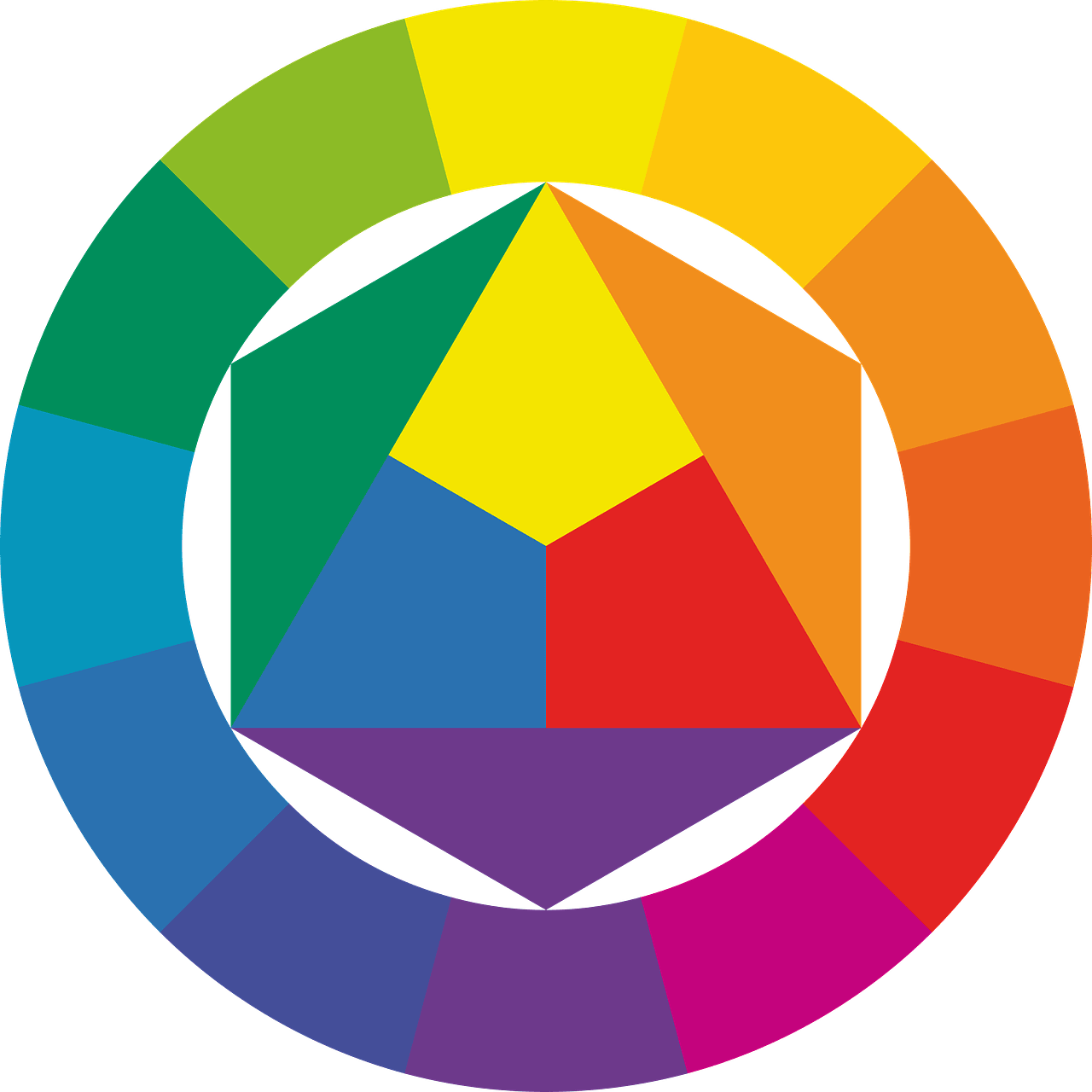
Colors are everywhere in our daily lives, and they can affect our feelings, thoughts, and actions, often without us even noticing. To understand how colors and emotions are connected, it helps to understand a little about the color wheel and how different colors and types of colors work together. By learning about the color wheel and how colors relate to each other, we can create spaces, clothes, and other things that make people feel certain ways.
The color wheel is a circular diagram that shows how colors are related. It’s a useful tool for artists, designers, and anyone else who works with colors. The color wheel helps us see how colors mix and match and how they’ll look when you put them together.
Primary colors are the building blocks of the color wheel and are combined to make secondary colors. There are three primary colors: red, blue, and yellow. These colors can’t be created by mixing other colors.
Secondary colors are made by mixing two primary colors together. The secondary colors on the color wheel are green, orange, and purple.
| Primary 1 | Primary 2 | Secondary |
| Blue | Yellow | Green |
| Red | Yellow | Orange |
| Red | Blue | Purple |
Tertiary colors are created by mixing a primary color with a secondary color that’s near it on the color wheel. These colors fill the gaps between the primary and secondary colors on the color wheel, giving us lots more colors to use.
The colors we see can affect how we feel. The effects of different colors on a person’s mood can vary from one person to the next, but here are some general rules that are true for most people:
How colors are combined and the patterns they create can change how we feel about them. Two important concepts related to how colors are combined are complementary colors and analogous colors. Complementary colors are opposite each other on the color wheel, and putting them together creates strong, eye-catching looks. These colors together can evoke powerful feelings or draw attention. On the other hand, combining analogous colors, which are next to each other on the color wheel, creates a calm, harmonious look.
Patterns can also affect our moods. Simple patterns, like stripes or dots, usually feel playful and fun, while complex patterns with lots of shapes can feel either calming or energizing, depending on the colors used. Patterns inspired by nature, like ones with flowers or leaves, often make us feel relaxed and peaceful.
Additional Resources
Holiday party season can look a little different every weekend: One invitation calls for jeans…
Each week, our head stylist, Ayla Ochoa, shares the new arrivals at Lulus she can't…
The menu is a group effort, but your outfit? Well, that's all you. When you’re…
You know what to wear to work on any given day, but dressing for a…
Every week, our head stylist, Ayla Ochoa, is sharing the new arrivals she can't stop…
Every week, we're sharing the new arrivals our head stylist, Ayla Ochoa, is loving most.…