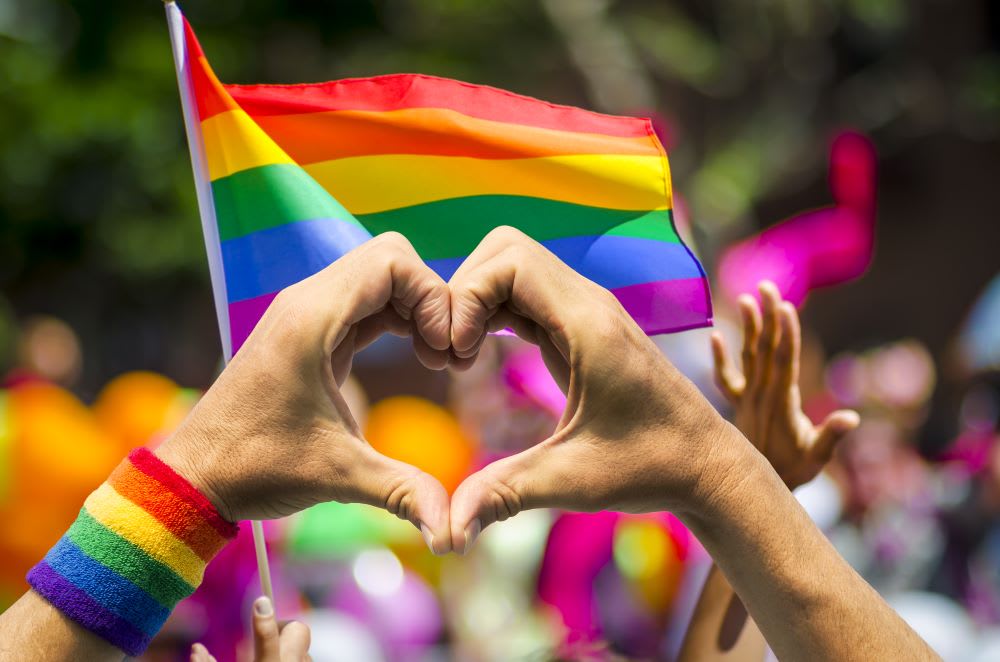
Come June, rainbow flags start flying high outside restaurant windows, front yards, and throughout towns and cities to celebrate the month of LGBTQI+ events. Pride events are often celebrations geared towards anyone who feels their sexual identity is outside of the mainstream but make no mistake, Pride didn’t start with rainbows and festivities. The month of celebration actually stems from riots, which is one of many Pride facts that are often overlooked or not widely known.
What started with LGBT (lesbian, gay, bisexual and transexual), is often extended to LGBTQIA+, to include queer, intersex and asexual groups. While we can obviously celebrate these communities all year long, the month of June is typically highlighted to embrace Pride and honor the hurdles these communities have overcome–and the rights they are still fighting for. While you might associate Pride with joyous events and colorful everything, there’s a whole lot of history and meaning behind it. Ahead, 6 Pride facts everyone should know.
Fact #1: Pride started as a protest.
On June 28, 1969, lesbian, gay, bisexual, and transgender individuals rioted following a police raid at The Stonewall Inn. At the time, police could legally arrest people perceived as men for doing drag, and people perceived as women could be arrested if they were found wearing less than three pieces of “feminine clothing.” That night, led by trans women and femme women of color, individuals were fed up and fought back. A year later, thousands of LGBT New Yorkers gathered for the Christopher Street Liberation Day (CSLD) March, which ran through Sixth Avenue from Greenwich Village to Central Park. Participants chanted, “Say it clear, say it loud! Gay is good, gay is proud!” This inspired organizations across the United States and around the globe to start their own LGBT marches.
Fact #2: Pride isn’t just celebrated by LGBT individuals.
Fact #3: Every color on the Pride flag means something.
In 1978, San Francisco artist Gilbert Baker created the iconic rainbow flag, which would be a symbol for the LGBTQ community. The original flag featured eight colored stripes (Pink, red, orange, yellow, green, turquoise, blue, and purple), which later dropped to six, losing pink and turquoise, due to cost and display considerations.
The colors reflect the diversity of the community; Red represents life. Orange represents healing. Yellow represents sunlight. Green represents nature. Blue represents serenity and harmony. Violet represents spirit. Many flags now also include brown and black to represent inclusivity and diversity.
Fact #4: Same-sex marriage wasn’t nationally legalized until a few years ago.
On June 26, 2015, the U.S. Supreme Court struck down all state bans on same-sex marriage, legalizing same-sex marriage in all fifty states.
Fact #5. Pride wasn’t always called Pride.
Pride parades weren’t always referred to as such. When early pride events took place, they were more militant and referred to as marches. “Gay Liberation” or “Gay Freedom” were common names for these marches. In the 1980s and 1990s, events moved toward a more parade structure and “Pride” language was more prominent.
Fact #6: The largest Pride Parade in the world is in Sao Paulo, Brazil.
View this post on Instagram
While the NYC Pride March in New York City is consistently North America’s biggest pride parade, the largest Pride parade in the world is in Sao Paulo, Brazil.
Since almost all Pride 2020 events were canceled due to social distancing guidelines, check out 5 Virtual Parades to Celebrate Pride Month At Home. (Fact: We’ll most certainly be adding “Pride Parade in Sao Paulo” to our 2021 summer bucket list.)
Did you know all of these Pride facts? Tell us your thoughts, any Pride facts we may have missed, and how you’re celebrating this year in the comments!
Join The Conversation (0)