
AAPI Heritage Month gives us a unique opportunity to recognize the contributions of Asian Americans and Pacific Islanders who have enriched America’s history and are instrumental in its future success. The AAPI group is extremely diverse and includes around 50 ethnic groups with roots in more than 40 countries and over 100 languages spoken!
Join us as we celebrate Asian Americans and Pacific Islanders’ unique heritages and traditions. Ahead, we’re highlighting some of our LuCrew AAPI employees (and members of Lulus’ AAPI Employee Affinity Group) as they share their favorite cultural memories.
Dumplings for Chinese New Year
Christine Gardner, Talent Acquisition Manager
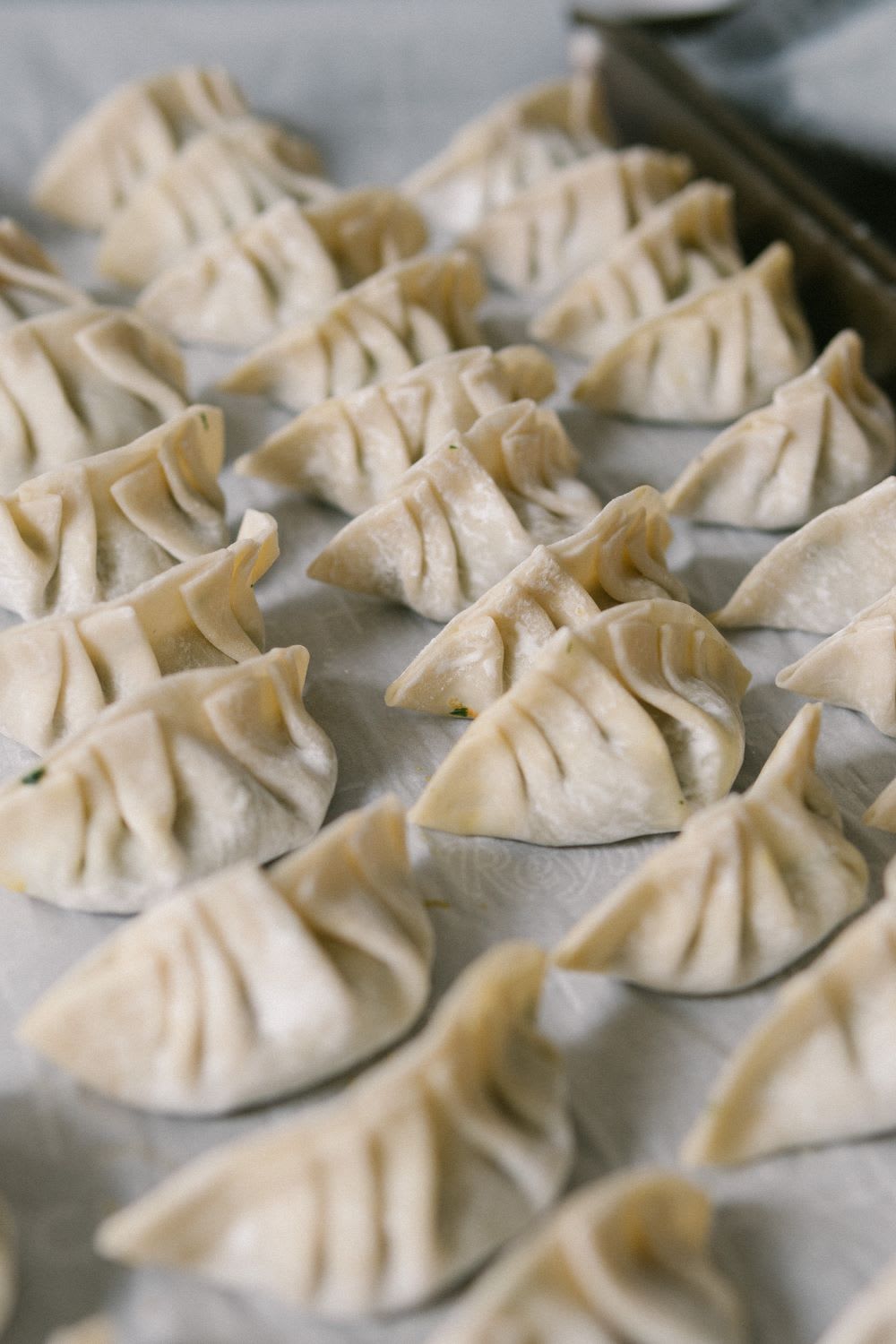
“One of my favorite memories as a kid was making dumplings with my grandmother for Chinese New Year. She had such fast hands and could roll so many in a short period of time. While cooking, she would also share stories of growing up in Taiwan.
“My grandma talked a lot about lost culture. When China took over Taiwan, it changed many things. I don’t think many people know that Taiwan was originally part of Japan! My grandmother spoke both Japanese and Taiwanese, an older dialect that has mostly been lost.
“My grandma passed three years ago, at the age of 99. Cooking always makes me think of her; anytime I smell the distinct aroma of ground pork, sesame oil, and green onions, it makes me feel at home.
“I still make dumplings for Chinese New Year and have started teaching my son’s fiancée how to do it, too. She is Hispanic, but if one day she has kids with my son, I want to make sure some of our traditions are passed down–in that way, we keep our heritage, and my grandmother, alive.”
1,000 Paper Cranes for Good Luck
Bret Williamson, Inventory Analyst
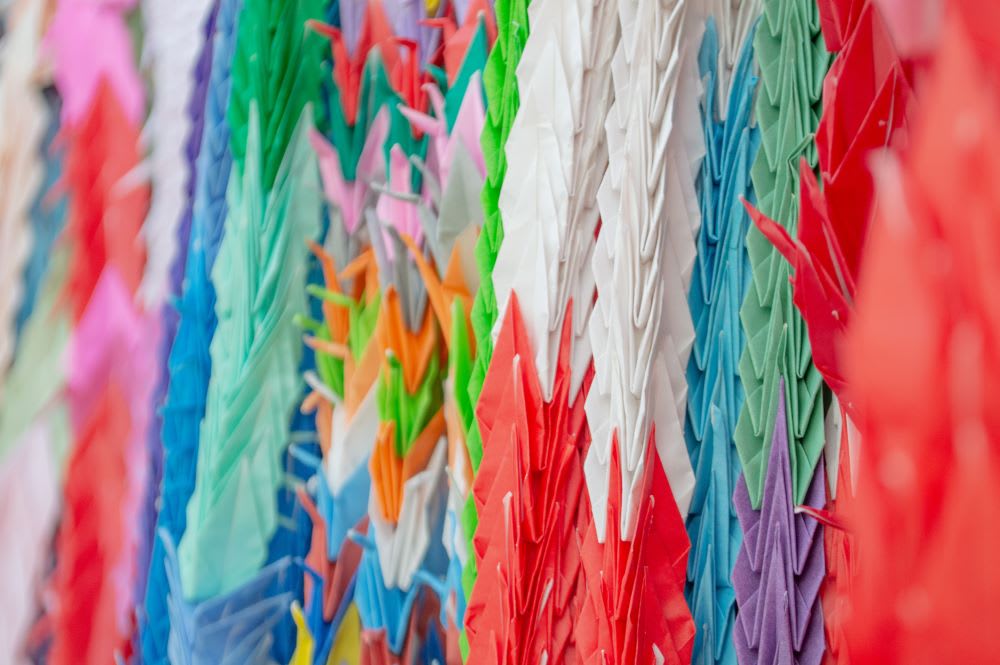
“In Japanese tradition, origami cranes are a symbol of good fortune, and the grouping of 1,000 origami paper cranes, according to some stories, is supposed to grant you a wish from the gods.
“My earliest memories of making cranes are from learning at church in our Sunday school classes. With the church my family attended being predominately Japanese, this was a common arts and crafts project given to the children. I also remember being in awe of seeing the 1,000 cranes hung in the chapel–a tremendous sight.
“In my family, we usually have these cranes at weddings, in hopes of an amazing marriage for the couple. In fact, for my sister, whose wedding was the most recent, we had an assembly line process in order to make the cranes more quickly and efficiently. (I was in charge of the first half, aka the less detailed folds.)
“When I was working in the office at Lulus’ Chico Distribution Center, I would hand cranes out and place them on managers’ desks in hopes of bringing good luck to those receiving.
“I have been fortunate enough to be able to experience some of the history behind the 1,000 crane tradition. My family visited Hiroshima when I was younger, a trip that included a stop at the Children’s Peace Monument. The monument is a tribute to Sadako Sasaki, a Japanese girl who developed leukemia as a result of radiation from the atomic bomb dropped on Hiroshima. Sasaki started to make 1,000 cranes in hopes of having a wish granted by the gods.
“After folding her thousandth crane, Sadako made her wish to be well, but she remained ill. Despite this, she kept her faith, and when she passed away, there were 1,300 origami cranes in her room. While her wish did not come true, she inspired friends and classmates to raise money for the monument, a statue of Sadako lifting a large paper crane overhead. At the foot of her statue, a plaque reads, ‘This is our cry. This is our prayer. Peace in the world.'”
(If you want to learn how to make origami cranes, here is a step by step guide on how to fold them: https://origami.me/crane/)
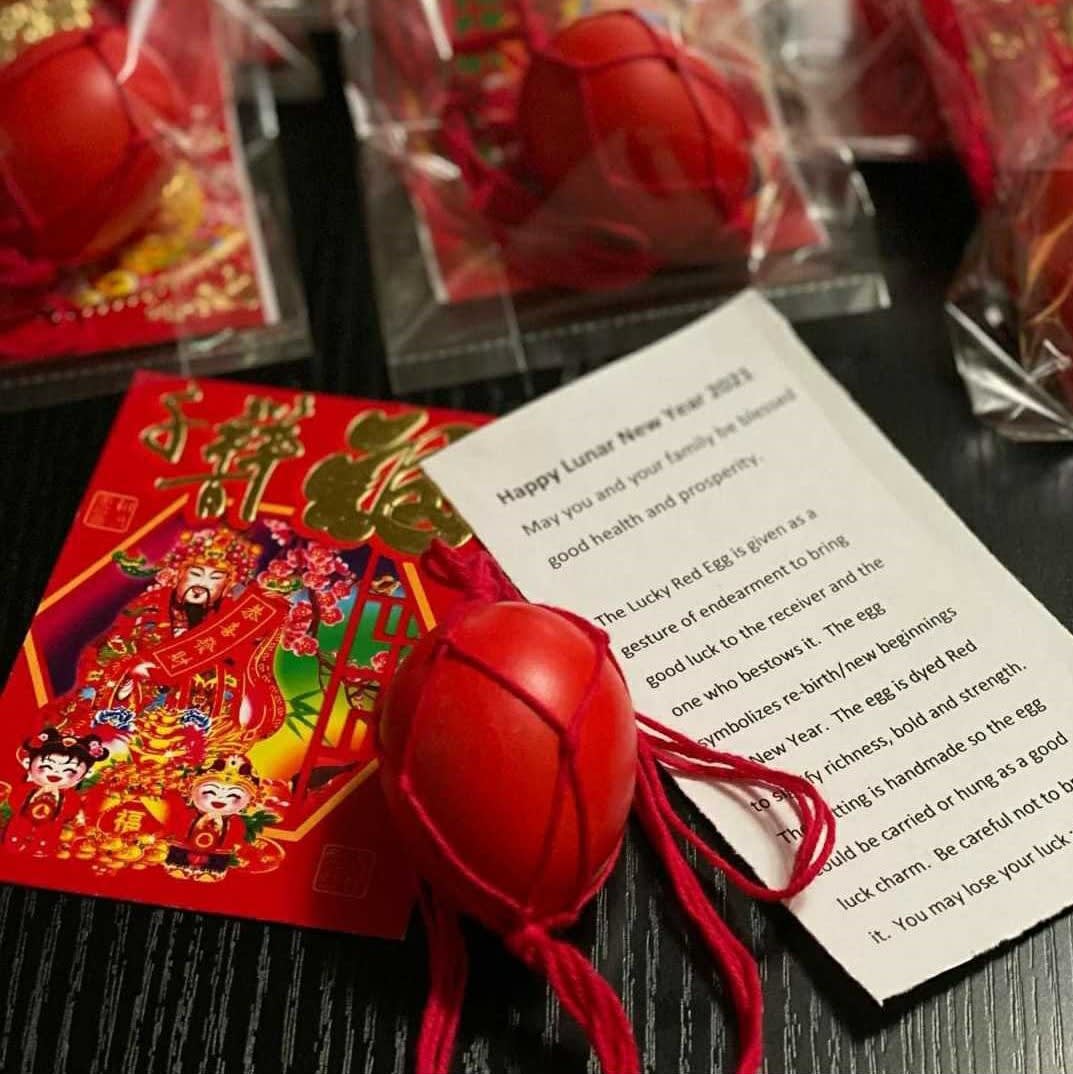
Red Eggs and Envelopes for Chinese New Year
Lisa Jaramillo, Outbound Operations Manager
“The Mien culture is influenced by the countries it originated from, and the ones it has made its home. Although many clans can now be found in Laos or Thailand, we migrated from China, where we are represented by the minority ethnic group of Yao. Although we have our own spoken language, it’s a mixture from our inherited countries, and we still read and write in Chinese. And this is where our traditional Chinese New Year ceremonies stem from.
“The first things I remember from early childhood are the red-dyed eggs and red envelopes with money inside, also known as hóngbāo. The egg symbolizes birth or a new start, while the red envelopes represent the good wishes and luck for the year ahead.
“The importance of the red envelope isn’t in the money held inside, but rather, the envelope itself. The color red is associated with happiness, prosperity, and good luck.
“As a child, I joined in on dying red eggs, and we’d have red stains on our fingers for days! It was a fun experience even when we didn’t fully understand the meaning. Being a child meant we received red envelopes; they came from parents, grandparents, aunts, uncles, and anyone that wanted to cherish us in the new year. Of course, we were more excited about what was inside the envelope in our younger years.
“Now that I’m in my adulthood, I appreciate the act of giving these out and sharing their meaning with those around me. Each year I like to put together gift bags each with a red egg, a red envelope with a $2 bill (cause those are much cooler than $1 bills!), and an explanation of the new year tokens. Not only does the action spread happiness but also the meaning and history of what we celebrate in our culture.”
Hot Pot for Special Occasions
Grace Su, Finance Manager
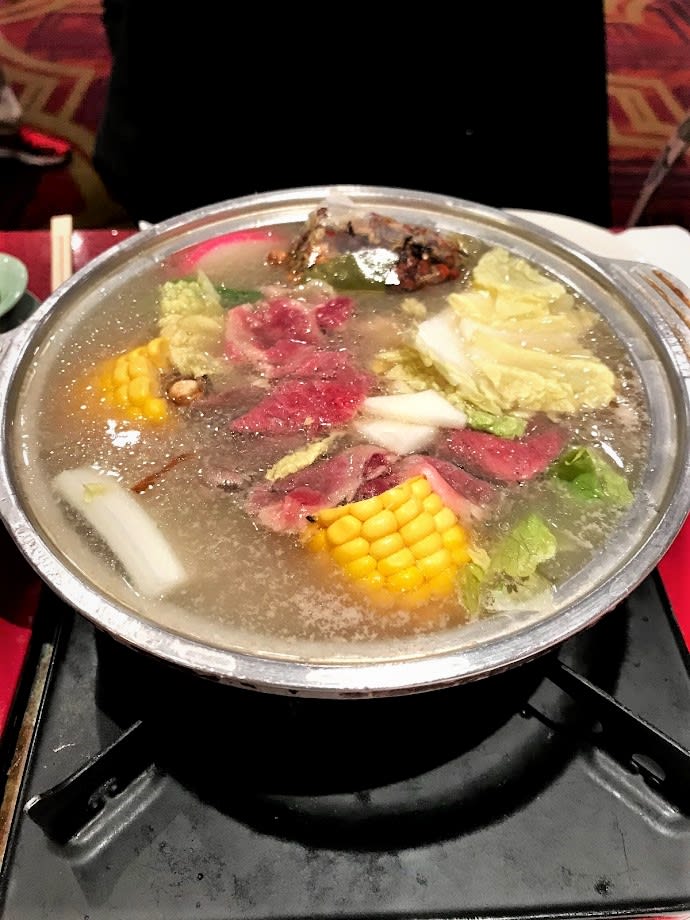
“Hot pot in my family was always a celebratory event. The family would gather around a bubbling, delicious broth and choose what veggies and meats we’d put in and take out of the shared pot. My parents whipped out the hot pot in celebration of anything and everything growing up, from the smallest accomplishment at school or work to the biggest milestone events.
“From birthdays to holidays to graduations, these dinner gatherings evoked a feeling of togetherness that cannot be fully expressed in words. This is a tradition that I hope to keep alive and pass down to my children. Isn’t it amazing how food and family can form such strong core memories?”
How do you celebrate AAPI heritage? Show us on Instagram @lulus or share your favorite cultural tradition in the comments!
Join The Conversation (0)