Fashions in Europe and North America have a very long history, and the idea of a fashion icon isn’t new. Records dating back to medieval times depict men and women who influenced the styles and fashions of people far and wide. Looking at a timeline of famous icons shows how European fashions have evolved and changed. Many of these icons hail from France, which is no surprise, since we think of Paris as a fashion hot spot to this day. But the history of fashion icons includes people from many different countries and walks of life.
Jean de Berry (1340-1416)
The third son of French King Jean II, Jean de Berry was an early patron of the arts known for collecting tapestries and embroidery and owning the first piece of Chinese porcelain to have reached Europe. He was known for fur-trimmed clothing that used sumptuous fabrics, but his excess came at a steep price that left him deeply in debt.
This Bavarian princess was married as a teenager and used fashion to assert her power, a tradition that a long line of queens and princesses would follow. She was a lover of fine jewelry and influenced wealthy women to wear tall headpieces. Some of her other notable fashions included ermine-rimmed surcoats and embroidered velvet capes.
Pisanello (1395-1455)
Antonio di Puccio Pisano, more commonly known as Pisanello, had a great love of textiles, gold, and silver. Pisanello was an artist hired by wealthy Italians to paint frescoes and portraits. He had an interest in fashion that led him to compare the clothing of the day to the clothing of antiquity. He made many sketches, some of which survive to this day, that emphasized the similarities between ancient and contemporary looks. Pisanello earned icon status because he created some of the earliest surviving fashion designs.
Charles the Bold (1433-77)
Queens weren’t the only ones who used fashion to project a powerful image. Charles the Bold, Duke of Burgundy, was a flashy dresser. He intended to dazzle onlookers with his appearance and even appeared in a jewel-encrusted suit of armor when he claimed Dijon as his capital. Charles popularized the idea of long ducal robes and the fur-lined capes we associate with the image of a king.
Beatrice d’Este (1475-97)
This Duchess of Milan made an effort to study fashion outside of Italy, which helped her design and develop the Milanese style of the day. Evidence suggests that she indeed did design some of her own clothing. She was known for wearing dresses with striped patterns, crisscrossing ribbons, hairnets, long necklaces, and pearls.
Francois I (1494-1547)
Francois I, King of France, was famed for importing textiles to form his lavish wardrobe. He influenced men to wear beards and even held a fashion competition called the Field of the Cloth of Gold, which pitted Francois against Henry VIII.
Henry VIII (1497-1547)
King Henry VIII of England may be known best for his six wives, but he was also a significant figure in fashion history. He was so concerned with being the best dressed that he passed laws that ensured he would be, and he constantly competed with French King Francois I. He had a tremendous impact on the English fashion of the day, popularizing the feathered cap, tight stockings, and duckbill shoes that the period is known for.
Mary I (1516-58)
Queen Mary I, daughter of English King Henry VIII, was a famed red-haired beauty. She wore the finest clothing, including ornamented French hoods, gold-embroidered chemises, open-seamed sleeves, and jeweled brooches. She also loved to give gifts of jewelry and clothing.
<Mary, Queen of Scots (1542-87)
Unfortunately, Mary Stuart, whose life was filled with tragedy, solidified styles associated with mourning and death. She is known today for wearing a black mourning gown with a broad white ruff. She portrayed herself as the Dowager Queen of France to gain sympathy from her subjects. She also wore black and red, the color of martyrs, to her execution to make a statement even in her last moments.
Puritans condemned this British queen for her lavish style of dress. She wore a new type of short-sleeved dress that exposed the forearms. Henrietta loved French fashion and influenced the styles of her court.
Hortense Mancini (1646-99)
Hortense Mancini was a mistress at the court of Louis XIV. As a favorite of the king, she had to be both fashionable and charming to win and keep his attention. Hortense is notable as an icon for wearing not only high feminine fashion but also menswear and hunting outfits.
Louis XIV (1638-1715)
Louis XIV, the Sun King, had an enormous and lasting impact on French culture. He aimed to make the French court the world epicenter of art, music, fashion, and culture, and he succeeded. He began the trend of curled and powdered wigs that men throughout Europe wore for decades.
Marie Salle (1707-56)
Marie Salle was a famous French ballerina, notable as an icon because she is an early example of a renowned artist who also impacted fashion. She also pushed to revolutionize theatrical costumes, shortening her skirts to what was considered a scandalous length above her ankles. Salle fought against convention to display the intricacy of her footwork. She also traded restrictive bodices for a loose, classical-inspired gown.
Jeanne Antoinette Poisson (1715-64)
Also known as Madame Pompadour, Jeanne Antoinette Poisson was a famous beauty. She captivated Louis XV and was one of his most powerful mistresses. As such, she was able to spend lavishly on her wardrobe, elevating French fashion to new heights with lavish embroidery, frills, and bows. Her style was mimicked not just in France but throughout Europe.
Marie Antoinette (1755-93)
The infamous queen of fashion remains an icon to this day. When most people hear the name “Marie Antoinette,” tall hairdos adorned with jewelry and ornaments come to mind. In the first half of the queen’s life at court, she used her fashion sense to gain respect: the more opulent, the better. After being criticized for her excess, she pivoted to a more straightforward, more pastoral form of dress that turned the previous style on its head.
Louise Contat (1760-1813)
This actress and singer was a star of France’s first established fashion magazine. As the printing press became more popular and magazines and newspapers more readily available, Contat’s fame grew. She was the star of the age, influencing both fashion and public opinion of actresses.
Emma Hart (1765-1815)
Emma Hart was a mistress, actress, muse to artists, and more. This woman of many sides was painted countless times and admired far and wide for her beauty. Her iconic status lived on into the modern world. Vivien Leigh even portrayed her in a film about her life.
Beau Brummell (1778-1840)
Beau Brummell defined the term “English dandy.” He achieved a high-quality, refined menswear look without looking flamboyant. He popularized the idea that there were varying ways to tie a cravat and that a formal men’s suit should be monochromatic. You can see his influence in today’s formalwear for men.
Empress Josephine Bonaparte (1763-1814)
Josephine Bonaparte’s influence over European style at the beginning of the 19th century was profound. Among other styles, she created a demand for long, straight dresses with a high waistline, inspired by tunics from antiquity. She loved Indian shawls and other foreign fabrics, which created a clamor for them. People wanted to dress like Empress Josephine long after her death.
Oscar Wilde (1854-1900)
Oscar Wilde was a man of words, so it was less his actual fashion that proved influential than his idea of what fashion was and could be. He dressed theatrically with capes, doublets, and knee breeches. Newspapers described him as cartoonish. As a vital member of the Aesthetic Movement, Wilde claimed that fashion could be used to express an idea, just the same as all other art forms. Even if people disagreed with Wilde, he was always brought up in fashion discussions at that time.
Denise Poiret (1886-1982)
Denise Poiret resembled what would become the quintessential flapper of the 1920s. She was very slim and popularized the long, narrow chemise dress that became all the rage. Her fame was widespread because she was the muse and model for her designer husband Paul Poiret, who said she embodied his ideal. Together, they made a splash on the avant-garde scene in the 1910s.
Katherine Hepburn (1907-2003)
In the 1940s, few people were more iconic than actress Katherine Hepburn. Although she was incredibly glamorous on-screen, she liked to be sporty and comfortable in off-screen life. This was one of the first times when women wore trousers in a way that was considered fashionable and widely popular. With women stepping up to do men’s jobs during World War II, practical clothing for women was very welcome. Hepburn led the way.
James Dean (1931-55)
James Dean, along with another famous actor, Marlon Brando, had a massive impact on the style of American and European young men. He brought about the rise of the “greaser,” a look that consisted of blue jeans, a plain white shirt, slicked-back hair, and often a leather jacket.
Audrey Hepburn (1929-93)
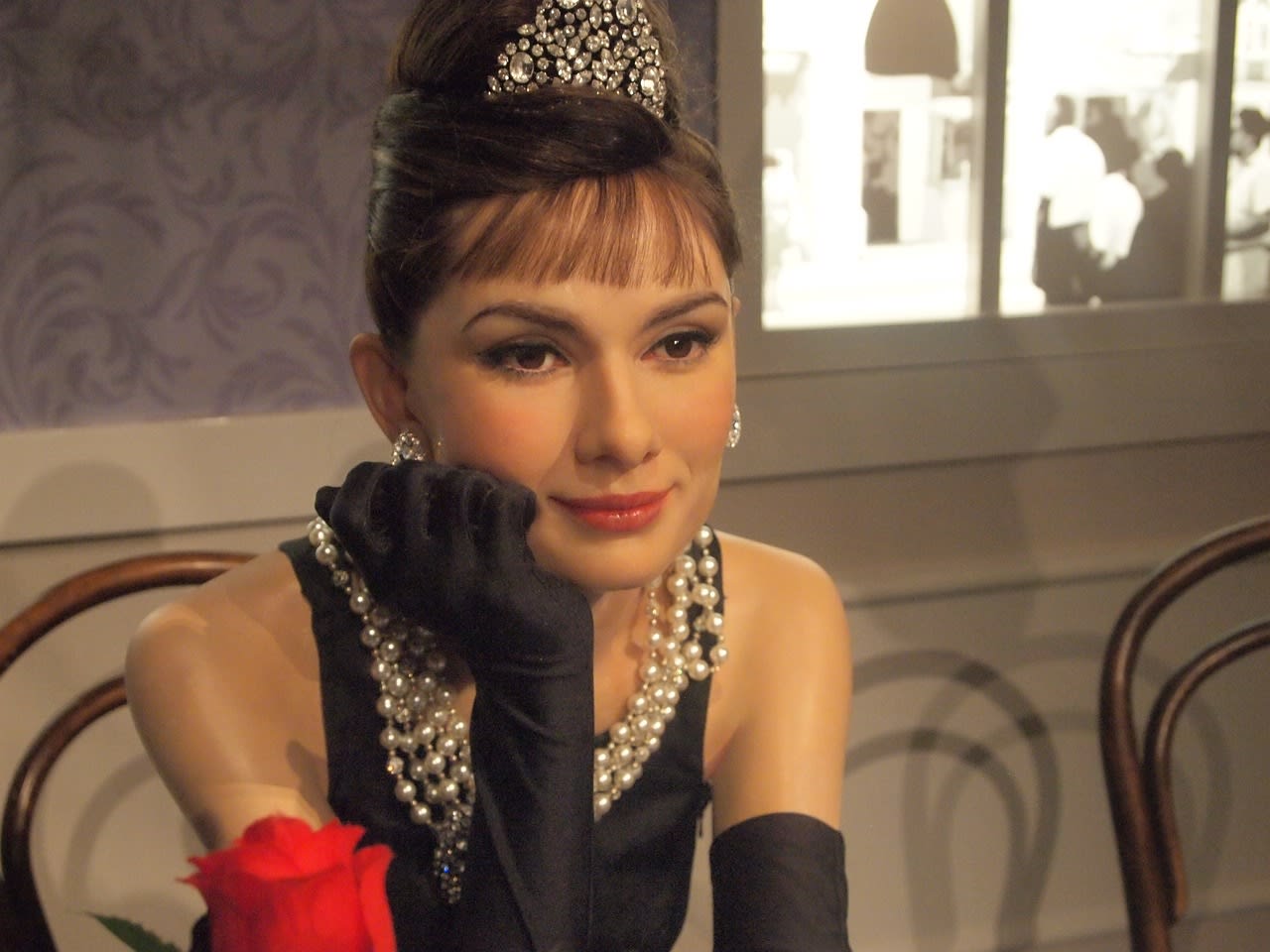
Audrey Hepburn, star of films like Breakfast at Tiffany’s and Paris When It Sizzles, wore the definitive 1960s high fashion wardrobe. All of her costumes from Breakfast at Tiffany’s were designed by Givenchy. Her iconic little black dress look is mimicked to this day. She even embraced alternative or “mod” styles like the bob, mini dress, and white-rimmed sunglasses.
Bianca and Mick Jagger (1943-present)
Bianca and Mick Jagger have rubbed elbows with the likes of Andy Warhol. When they were married in 1971, Mick wore a paisley shirt, and Bianca wore a Yves Saint Laurent suit. They were fashion icons throughout the 1970s, wearing the latest trends, like bright colors and flowing cuts.
Princess Diana (1961-97)
The beloved Princess Diana was a 1980s icon, wearing styles mimicked in the U.K. and abroad, including bright colors and patterns, off-the-shoulder gowns, and oversized sweaters. Her puff-sleeved wedding gown inspired many 1980s formal dresses.
Paris Hilton (1981-present)
Paris Hilton rose to prominence in the early 2000s while wearing the defining pieces of aughts fashion on the red carpet. These looks and brands included Ugg boots, crop tops, tracksuits, baby doll tanks, and low-rise flared jeans.
Kim Kardashian (1980-present)
Kim Kardashian is a significant contributor to Internet trends sparking fashion movements. People have tried to emulate her style, from her body to her makeup to her clothes. In cosmetics, she made sculpted eyebrows and big lips the go-to look. Kardashian also started fashion trends including thong heels, neon fabrics, bodysuits, bike shorts, and latex.
Harry Styles (1994-present)
Harry Styles is a modern-day fashion icon because of his bold styles that defy gender norms and expectations. Gender-fluid outfits are popular among Gen Z, who often cite Styles as their style inspiration. Other celebrities are also pushing gender boundaries in fashion, including Billie Eilish and the members of K-pop group BTS.
Who’s your favorite fashion icon? Tell us in the comments–or show us your iconic style on Instagram or TikTok @lulus using #lovelulus and check out more in our What’s New Shop!
Join The Conversation (0)