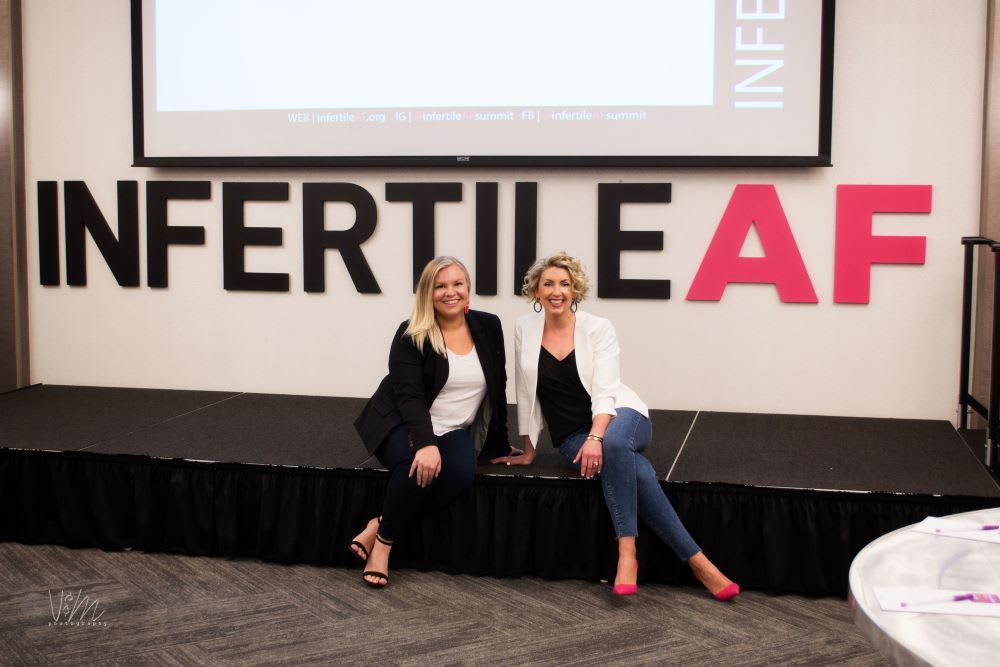
Dealing with infertility is stressful and, too often, isolating–that’s why Tia Gendusa and Lindsay Fischer want to change the conversation. As co-founders of InfertileAF (yes that means what you think it means), they bring women together, empower them to share their stories, and create safe spaces for talking about infertility honestly. This World Childless Week, we chatted with Gendusa and Fischer about changing the way we discuss (or don’t discuss) infertility, coping with grief, life after IVF, and how women can support each other.

Better Together
Lulus: So, first things first: How did InfertileAF start?
Tia Gendusa and Lindsay Fischer: Instagram has a robust infertility community and we met while we were both cycling several years ago. We have both always been outspoken voices through every part of our journeys. So it makes sense that we [kept] up with one another, even when both of us were finished with IVF.
InfertileAF started, truly, as a plan for Lindsay to spend a weekend in Chicago with several women (Tia included) who are active online. Then, Tia asked if we could turn it into something like a dinner where we all talked and shared our stories. With my background in public speaking, I told her we needed to dream bigger. So we committed to trying to create the InfertileAF summit–and the rest is history.
Lulus: Why call it InfertileAF?
TG and LF: [Since] both of us are rather outspoken voices in the community, it only made sense that our company name was both catchy and in-your-face. The name serves two purposes. The first: as a badge of honor that we and all our community members proudly proclaim, YES! We are Infertile (as f*ck) and that’s okay. The second: Anyone that has spent any amount of time trying to conceive [knows] there are many acronyms associated with our journey. AF also stands for Aunt Flow, a monthly period that can signal the beginning or end of hope for a specific part of our cycles. Our name grabs your attention and our mission statement is bold and empowering.
Breaking the Silence
Lulus: Why do you think there is so much silence and taboo around talking about infertility and IVF? How are you hoping to change that?
TG and LF: Infertility is truly one of those topics that society doesn’t really understand all that much. If you couple the lack of knowledge with the need to “fix” someone who is struggling, it can be really hard to have open conversations about your struggles with someone who doesn’t understand your situation or options. Most people offer up suggestions or ask about options without considering how much thought and effort the infertile person (or couple) has actually put into their own journey. It can truly leave you feeling alone, misunderstood, and hurting.
Lulus: You share real-life stories on your blog every week, and hold an InfertileAF summit every year. Why is it so important for women to share their stories about infertility?
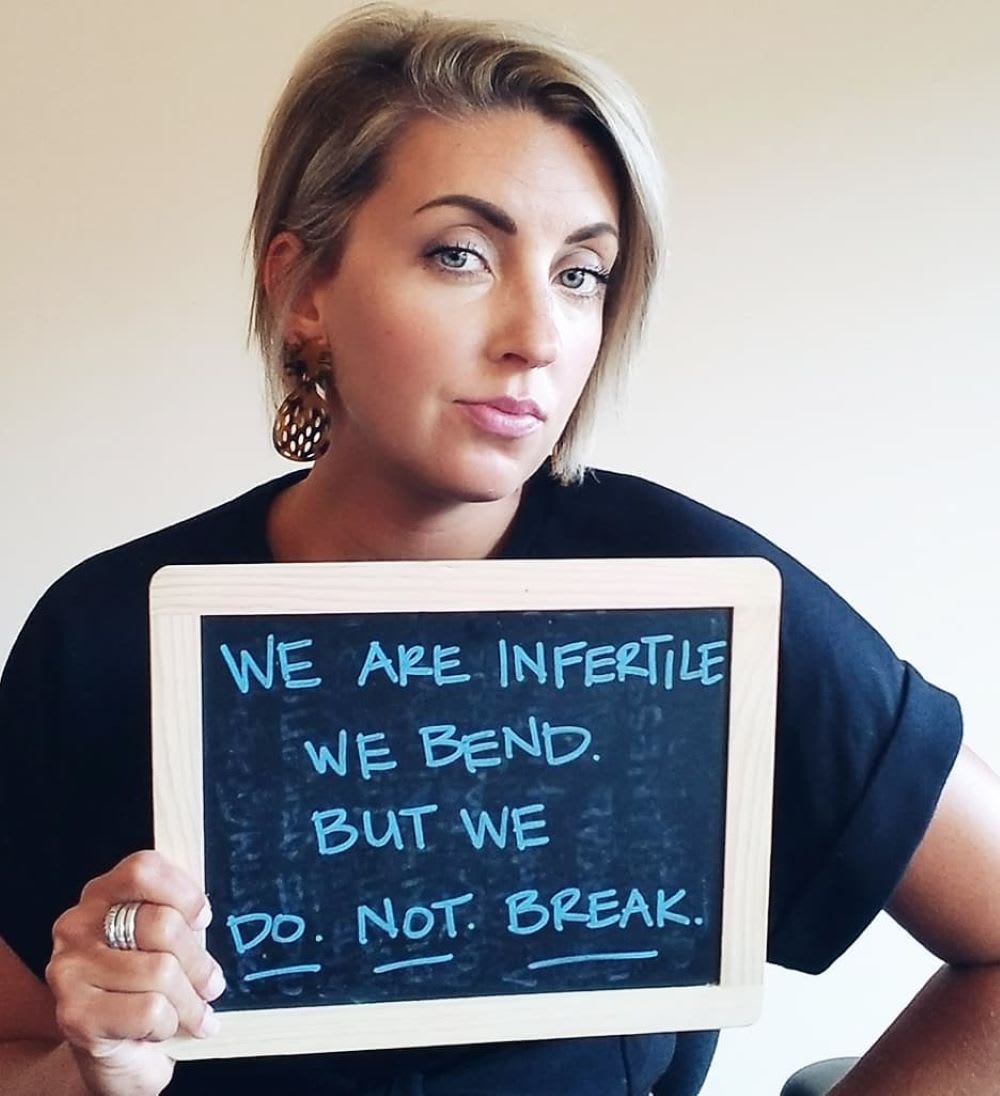
TG and LF: We think power lies in knowledge. And we know, based on the research of Brene Brown and countless others, that shame lives in silence. So sharing other people’s stories is two-fold:
1. To better educate people on every infertility journey: male or female, same sex or heterosexual couples, adoptive parents or those who choose not to undergo treatment.
2. To empower people to share their stories so they no longer carry the burden of secret, and to find a community of people to rally around them so they feel like they belong in a time when they likely feel defective.
Life After IVF
Lulus: Your stories have different outcomes. Tia, your Instagram account is very candid about being childfree after IVF. How did you decide to stop the process?
TG: The choice to stop treatment and move forward childfree came all at once but built up over the course of many, many tiny decisions along the way. We endured a miscarriage, multiple chemical pregnancies, massive genetic issues between the two of us and a lot of hormonal obstacles. My husband and I discussed stopping points and options along the way. While some boundaries were pushed (moving from IUI to IVF) we were adamant about others. Adoption and donor options never set well with us personally, so when we finally felt comfortable that we had exhausted all other options, we agreed it was time to move forward without children.
Lulus: Why do you think women are so reluctant to talk about life after IVF when it’s unsuccessful? And why is it so hard to “quit” treatment?
TG: Society has predisposed women to believe that we are essentially “not complete” and “not a family” until we have children of our own. Historically, family includes a man, a woman, a dog, and 2.5 children. These days, the landscape of the definition of family is changing drastically, and for good reason. I believe my husband and my dog make a whole family.
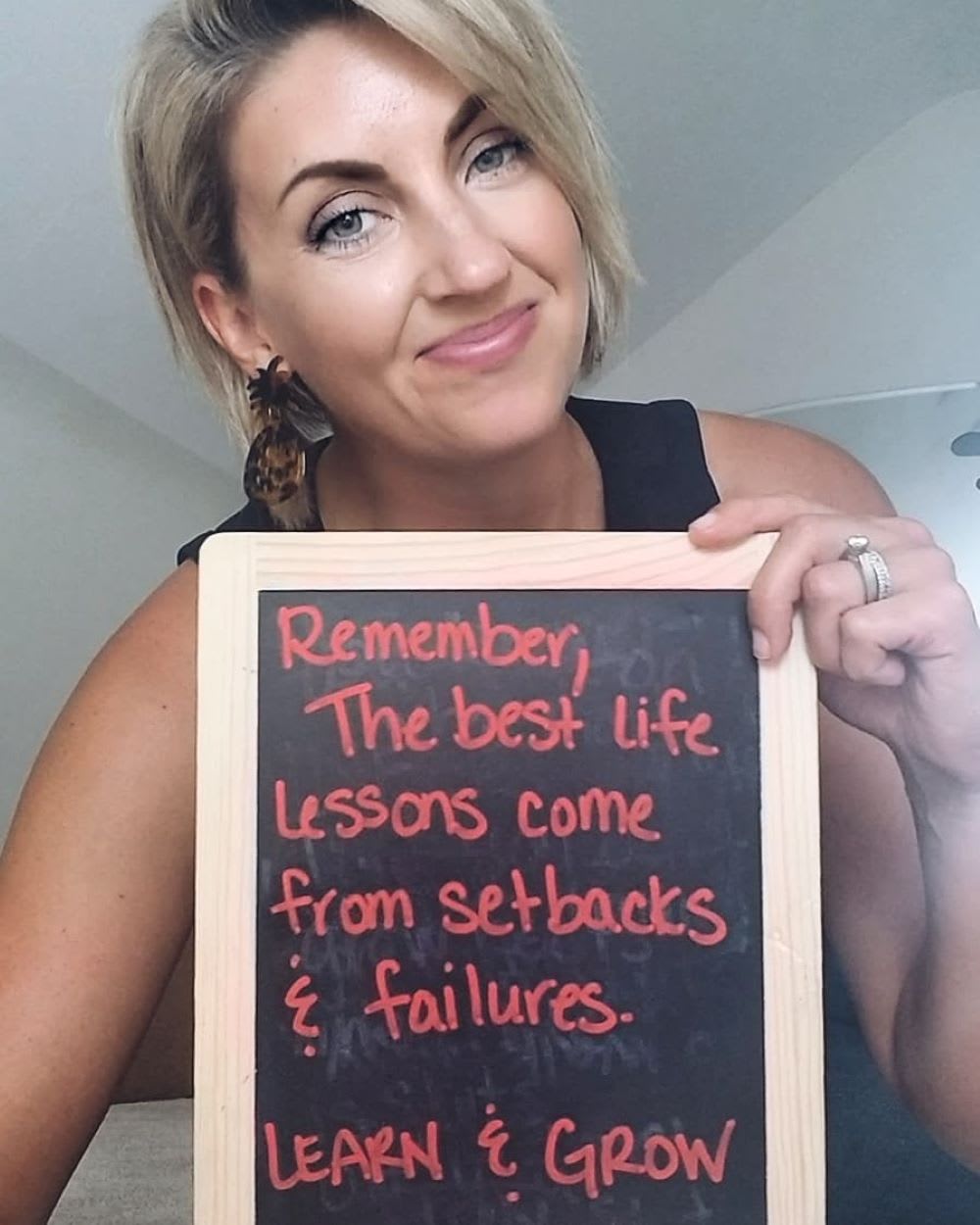
While I do believe hormones jump-start the desire to expand our families, the pressure to keep going until we “find success” with kids is overwhelming at times. We are raised to never give up in so many aspects of our lives that it completely makes sense for it to trickle into trying to conceive. However, attempting to beat our reproductive systems into submission or scraping up tens of thousands of extra dollars for a surrogate, donor, or adoption efforts can leave us feeling like failures.
Each person walking with infertility should take major mental health steps to honor their own personal boundaries with family building and put less emphasis on outside societal pressures. This takes an enormous amount of commitment and energy but is so worth it to preserve our sanity and sense of self.
Talking About Every Infertility Outcome
Lulus: Lindsay, your IVF cycle resulted in twins–what motivated you to stay involved with this issue? How did it affect you long term?
LF: I think a lot of people immediately assume once you get pregnant that your struggles with infertility just sort of evaporate into thin air. For me, I found that infertility kind of followed me through pregnancy and into motherhood. I was convinced something would go wrong my entire pregnancy. I just couldn’t imagine actually having a healthy pregnancy and being a mom after.
One example I use often is that people often look at me and say, “Wow! Your husband must have strong swimmers!” when they realize we had twins, when we were actually diagnosed with male factor infertility straight out of the gate. Well-meaning people say silly things that seem harmless but when you hear them constantly, it’s hard to digest. My husband always felt a smidge insulted by these things and I immediately felt like I had to explain that we needed IVF. Maybe I didn’t actually need to, but that was my initial, natural reaction.

Beyond that, there’s this really unhealthy idea that we “beat” infertility when we have babies and yet, I’m still infertile. If we wanted to expand our family further, I’d still need IVF or to look into fostering or adoption. I found a loophole and got my desired outcome. But unless I deal with the mental health aspect of always being infertile–and being candid about it–I really feel like we aren’t seeing the whole picture.
I love my kids, but they didn’t solve anything. They aren’t an infertility trophy. They are everything I wanted and yet it’s still complicated, right? Because I still very much wish my endometriosis didn’t exist or cause pain and complications. There’s nothing black and white about (dealing with) infertility and I think it’s time we start truly having the hard conversations about each and every outcome.

Dealing with Infertility: Mental Health Matters
Lulus: What do you both wish you knew before starting IVF?
LF: I wish doctors were more forthcoming with actual success rates that didn’t inflate their organization’s appearance, and I wish I would have been given resources to help me focus on my mental well-being. Infertility is a whole-person problem, not just about my reproductive organs. I think a more holistic approach straight out of the gate would have been helpful.
TG: I wish I was put in contact with support groups and mental wellness resources from the forefront. While my doctor, nurses, and support staff were all very cordial with me, there was a huge lack of community and understanding with the mental aspect of treatment.
View this post on Instagram
The Only Way Out is Through
Lulus: Any tips for coping with grief and tough days?
TG and LF: Lean into whatever emotion you’re feeling and let yourself feel it. There’s nothing beneficial about stuffing down feelings or trying to act like they never existed. In fact, we feel like you have to feel them in order to move away from them again.
But, also, while doing this, can you give yourself fifteen minutes of self-care time, even on a hard day? Can you walk outside and stand barefoot to feel more grounded? Or take a bath? Go for a run (if you like more vigorous activities)? Call a friend? Any amount of time you spend on self-care on your hardest days is not wasted; it’s your chance to prove to yourself that you’re still so deserving, even when you don’t feel like it.
View this post on Instagram
Education, Honesty, and Understanding
Lulus: For women dealing with infertility or life after IVF, are there resources you recommend?
TG and LF: Obviously we recommend Lindsay’s book, “The Two Week Wait Challenge“, to anyone currently trying to conceive, and we think the summit speaker’s compilation, “Bold, Brave, InfertileAF,” is an excellent resource to inspire and empower women who are at any stage in their infertility journey. We love the InfertileMafia podcast, love Pregnantish, and Miss Conception Coach.
Lulus: How can people support friends dealing with infertility and/or life after infertility? Any things to avoid saying?
TG and LF: The idea that we should try and control what others say and do is, honestly, useless. We are not in control of these things and should never waste our precious energy trying to manipulate others. The key to better understanding between those walking with infertility and those in support is education, empathy, and honest conversation. Surface level emotions can be re-directed when the person going through treatment is comfortable explaining their emotions, diagnosis, and struggles in a non-confrontational way.
Friends and family looking to support someone through infertility can envision this type of support the same way you would with someone battling cancer or dealing with the death of a loved one. Holding space for emotions and clarity is paramount. A shoulder to cry on, a warm embrace, and a hot meal or cup of coffee go a long way [in saying],”I care even if I don’t understand.”

Lulus: What else do you want women dealing with infertility issues to know?
TG and LF: You are not alone. Come hang with us because we’re better together.
Dealing with infertility or helping support someone who is? You’re not alone–share your stories or questions for Tia and Lindsay in the comments!
Join The Conversation (0)