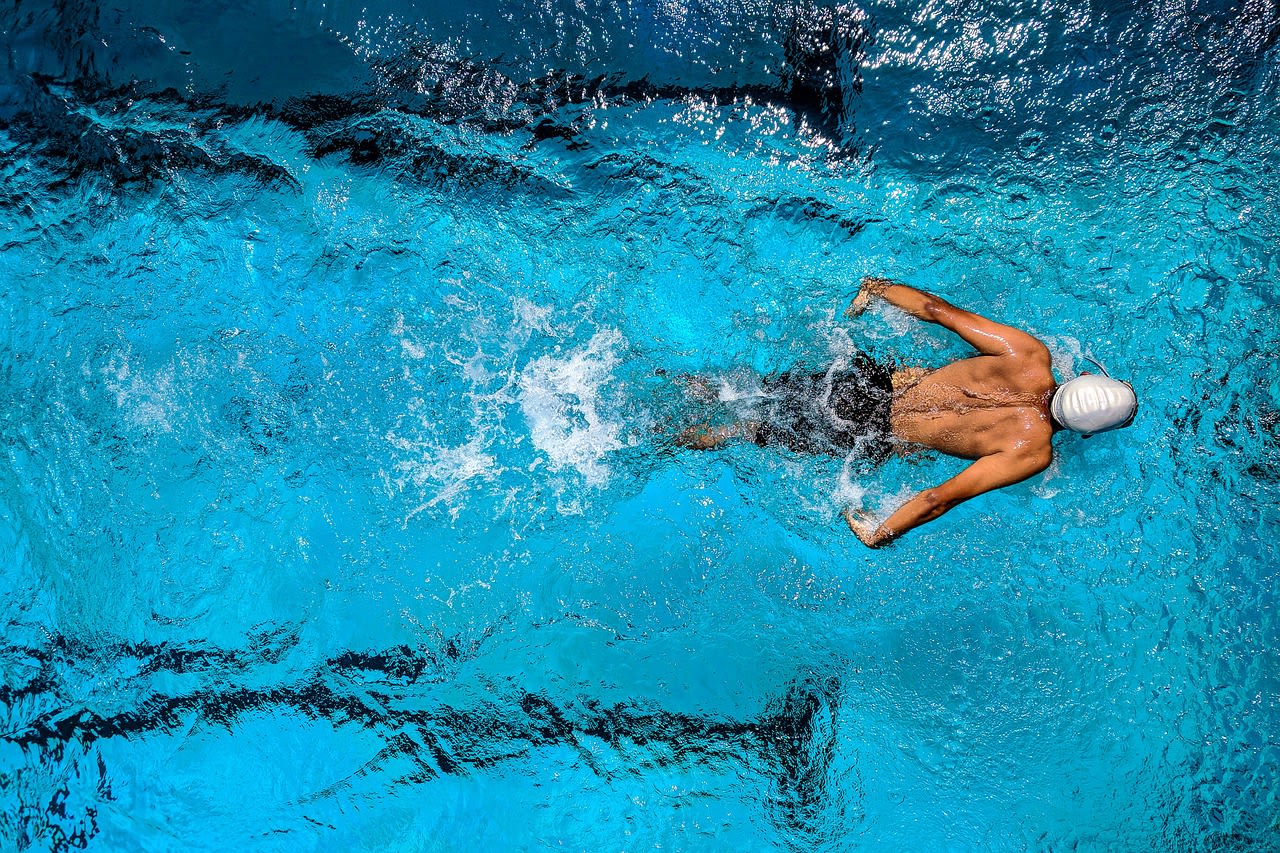
Most of the time when people think of swimming and diving they think about hot summer days, splashing around at a waterpark or the local public pool. A recreational activity. However, there is a whole other world of swimming and diving that does not always go to the forefront of everyone’s mind, and that is the competitive world.
Swimming is a sport that dates all the way back to the 19th century when the first organization was started in London in 1837. By 1846, the first competitive swimming championships were held in Australia. Swimming is now one of only four sports that have stayed part of the Olympics since its first games in 1896. It has evolved immensely over time, going from one stroke to four; from open water to lane-divided pools; from two events to nearly 20. Each year, as new techniques developed and swimsuits became more hydrodynamic, the athletes kept getting faster. Superstardom crept up on the swimming world when Mark Spitz won seven gold medals at the 1972 Olympics in Munich. Michael Phelps would later become the only person to break that record, winning eight gold medals at the 2008 Beijing Olympics, and is now the most decorated Olympian of all time. His impact on the sport is remarkable, and he has become one of the icons of competitive swimming.
With a decades-long head start, swimming had already proved to be a popular aquatic sport, and it wasn’t until the late 19th century that the next one took shape. One summer in the late 1800s, gymnasts took their training to the beach, performing their acrobatics over water. It quickly became a popular activity and made its Olympic debut in 1904. It began as a men’s only event using a platform diving board, but now includes more variety including springboards, platform boards of varying heights, as well as singles and doubles events. There are also exponentially more types of dives at the competitive and professional levels. By the year 2000, the official diving governing body had listed over 60 springboard dives and 85 platform dives that can be done in four positions. Because of the variation and excitement in the sport it is one of the most watched events at the Olympics.
Both of these aquatic sports teach discipline and strength. Diving is more specialized, requiring not only precision and grace, but also the ability to try out many different twists, flips, and jumps that won’t always lead to a perfect landing. Swimming is more accessible. It is never too late to learn how to swim and it can be a great recreational way to stay active and healthy if the competitive aspect of the sport feels out of reach. Each sport is unique, with its own history and complexities. These popular aquatic activities can be fun and competitive, on top of being great ways to stay active, and understanding the why behind them can make it all the more meaningful when they are put into practice.
Swimming
Competition Swimming Regulations
Michael Phelps Butterfly Drill
How Swimmers Train at All Levels
How to Become a Better Swimmer
Diving
Competitive Diving Principles (PDF)
What Diving Parents Should Know
Water Safety
Join The Conversation (0)