Jessica D’Argenio Waller is a nutritionist and wellness editor at welltribe.co. Here, she fills us in on the beauty superfoods you might want to add to your diet.
It’s no secret that really good skin starts with what you eat. Ever noticed how your face feels puffy and dull after a wild night of cake and champagne? While we’re all about balance (we prefer our Brussels sprouts with a bit of bacon, please) ramping up your daily intake of these six skin superfoods can only help you get that glow– so stock up!
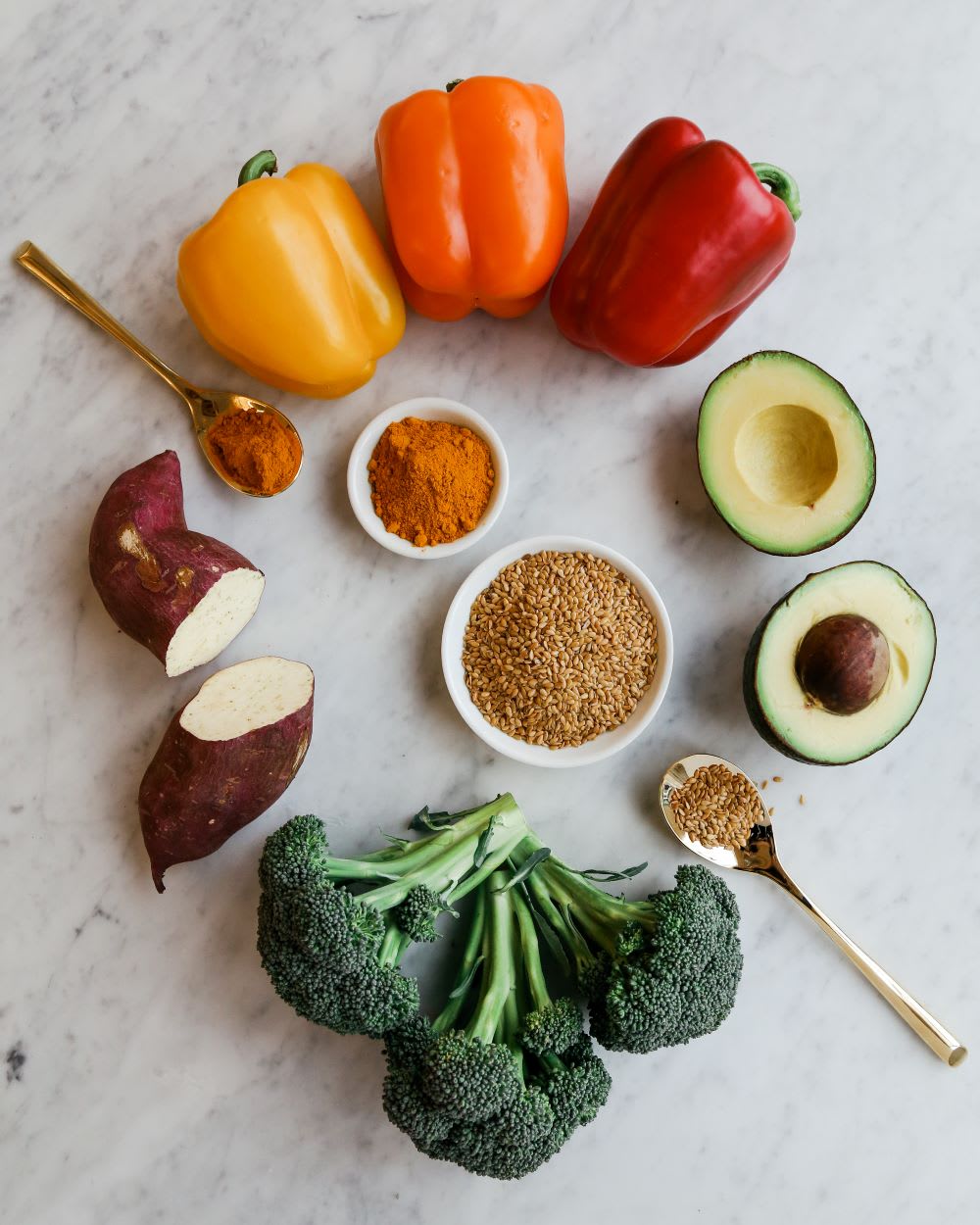
Japanese Sweet Potatoes
These aren’t your regular yams: the Japanese variety of your favorite potatoes are purple-skinned and white-fleshed. Prized for their high content of hyaluronic acid, which is known to bring the bounce—it improves skin’s elasticity and can heal scar tissue. Some (read: celebrities like Olivia Munn) swear by daily consumption to keep hyaluronic acid levels consistently elevated. Try roasting these super spuds with olive oil, cinnamon and sea salt for a savory side.
Red or Yellow Bell Peppers
Move aside, citrus. A single cup of bell pepper provides 317% of your daily vitamin C, which is a building block for collagen production and has been shown to reduce fine lines and wrinkles. One study among 4,025 women aged 40 and up successfully illustrated that higher intakes of vitamin C improved skin appearance, reducing the effects of aging (i.e. wrinkles and dryness). Pre-sliced peppers make a stellar desk snack with hummus or tzatziki, or add a handful of diced pepper to chili or stews just before serving.
Broccoli
Like other members of the cruciferous family (think: kale and Brussels sprouts), broccoli contains a potent compound called sulforaphane, a powerful protector against sun damage. In lab testing, sulforaphane reduced the number of skin cells killed by UV light up to 29%, and can also help maintain skin’s natural collagen levels. Roast broccoli florets with sea salt and crushed red pepper, then serve with lemon-zested Greek yogurt and a drizzle of olive oil for a Mediterranean spin.
Turmeric
An adaptogenic and medicinal herb, turmeric boasts high amounts of anti-inflammatory compounds like curcumin and vitamin B6, which work to quell inflammation and boost blood flow—great when winter weather causes your face to flare up. Add turmeric to soups, curries and rice dishes, or seek out some golden milk at a nearby café.
Avocado
Love avocado toast? You’re in luck: The creamy green fruits (yep, they’re technically a fruit!) are filled with healthy fats and rich in minerals. They also contain unique compounds called polyhydroxylated fatty alcohols, which provide excellent sun protection and help repair damaged DNA for new skin cell regeneration. (But still slather on the SPF, please!) Good news about our latest obsession: avocado-topped everything bagels.
Flaxseed
Mix a tablespoon of flaxseed oil into your morning smoothie or sprinkle ground flaxseed on top of cereal for a serving of healthy fats that your skin will soak right up. A great plant-based source of omega-3 fatty acids, scientific studies have shown that flaxseed oil, when consumed daily, can improve skin hydration and texture and reduce sensitivity in just 12 weeks. A true superfood, they’re also chock full of fiber to help with easy digestion and a good source of lignans (plant forms of estrogen) for healthy hormone balancing, too.
What’s your fave way to feed your face? Tell all in the comments!
Join The Conversation (0)