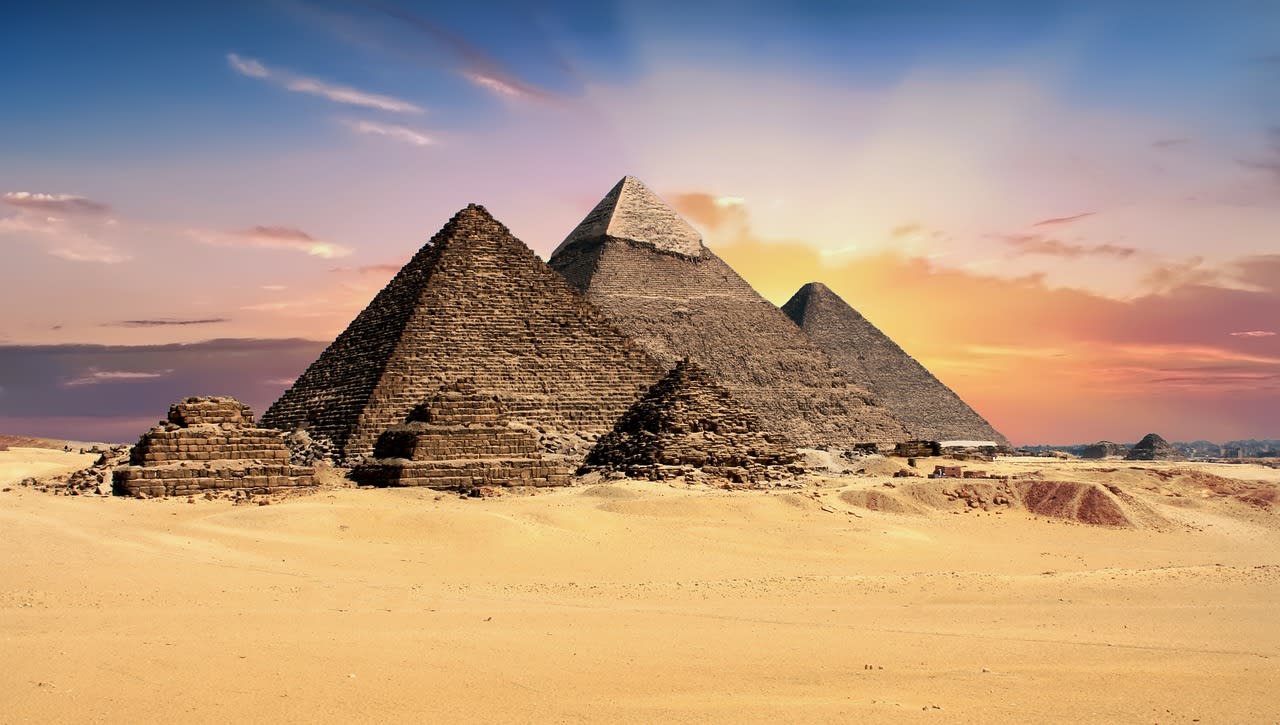
When most people think about ancient Egypt, they think about the rituals surrounding death. After all, the pyramids are the enduring symbol of civilization. But there is much more to ancient Egyptian culture. They believed that no one had better lives than they did, and they have proudly preserved their legacy through many lasting monuments and cultural influences.
Population & Social Classes
A key component of life in Ancient Egypt was social classes. Much like the pyramids the Egyptians built to honor their dead rulers, the social structure of the civilization resembled a pyramid. At the very top was the royal family, followed by members of the royal court, like the vizier and priests. Next were the soldiers, scribes, merchants, and artisans. Finally, there were the peasants, primarily farmers, with enslaved people and servants at the bottom of the social order. The peasants were the largest social class, and the royal family was the smallest. There was some possibility that a person could work their way up the rungs of the social ladder by learning trades or getting bureaucratic jobs. In rare cases, some pharaohs were elevated so high that they were considered gods.
- Egyptian Social Structure
- Ancient Egyptian Society Level Pyramid (PDF)
- Egyptian Social Organization-From the Pharaoh to the Farmer
- Social Status in Ancient Egypt
- Social Stratification & Mummification in Ancient Egypt: The Inevitability of Variability in the Post-New Kingdom Mummification Program (PDF)
Homes & Furnishings
Artisans were responsible for making furniture and decorations for Egyptian temples, palaces, and homes of upper-class Egyptians. Peasants couldn’t afford luxuries like tables, chests, and beds that they made for members of the upper classes. Farming peasants lived in small homes with roofs made from bundled plants. Floors could be straw-covered or feature rugs made out of reeds. Sometimes the houses had as many as three rooms, and the family occupied the rooms with their farm animals. The royal family lived in a vast palace made from precious materials covered in ornate art and architecture.
- Ancient Egyptian Houses: Symbols of Warmth and Social Power
- House Types of Ancient Egypt
- The Homes of Ancient Egyptians
- How Ancient Egyptian Houses Were Made & The Materials Used
- The Ancient Egyptian Home
Crime & Punishment
Like all societies before and since, ancient Egypt had crime issues. During the New Kingdom, Egypt established its first police force. Before that, local officials ran simple courts to deal with crimes. The central government only dealt with crimes if property belonging to the state was involved in a crime. Often, courts got held in the market, and local community leaders heard individual cases. At one point, priests of the god Amun heard cases and rendered verdicts after consulting with him. Petty criminals were fined, but more serious offenses had severe punishments like forced labor, mutilation, imprisonment, or even execution.
- The Emergence of Law in Ancient Egypt
- Exploring African Law and Ancient Egypt
- Ancient Land Law: Mesopotamia, Egypt, Israel (PDF)
- Crime and Punishment in Pharaonic Egypt
- 10 Ways Crimes Were Investigated And Solved In Ancient Egypt
Family & Leisure
Priests were an essential part of Egyptian life. Both men and women were priests and typically matched the gender of the god they served. Priests could have families, and children of priests often also became priests. This was common across all levels of Egyptian life. Children typically took on the career of their parents. Women had almost the same rights as men during this time. They could own property, divorce their spouses, and enter into contracts. Women also served as pharaohs at least four separate times. Girls usually married around age 12, while boys married at age 15. Women could come to Egypt to be married, but it was frowned upon for families to marry their daughters off and send them to live in foreign lands.
Leisure activities were important to ancient Egyptians. They played versions of sports like handball, hockey, archery, and water jousting, a sea battle that took place in small boats. Boating and swimming were very popular among ancient Egyptians. Children usually learned to swim at an early age.
- Ancient Egyptian Society and Family Life
- The Eternal Nature of the Family in Egyptian Beliefs
- The Role of Women in Ancient Egyptian Civilization
- Ancient Egyptian Entertainment
- Ancient Egyptian Sports and Pastimes
Festivals, Food & Clothing
The birthday of each Egyptian god was celebrated with a festival. Those weren’t the only festivals on the ancient Egyptian calendar. Festivals celebrating the life of the pharaoh, along with community and family celebrations, were often held. All festivals centered around food. Ancient Egyptians ate a lot of grains and vegetables. Typically only royalty ate meat. Each festival had its unique attributes. One thing that set celebrations apart was the clothing. Priests typically wore white when celebrating feasts, but the rest of society wore whatever they chose.
Typically, ancient Egyptians wore clothing made of cotton. Through the Early Dynastic Period, everyone wore kilts made of linen. Children under age ten wore no clothing at all. By the age of the New Kingdom, women wore linen dresses that went from their shoulders to their ankles, and men wore simple shirts with skirts or tunics.
Join The Conversation (0)