,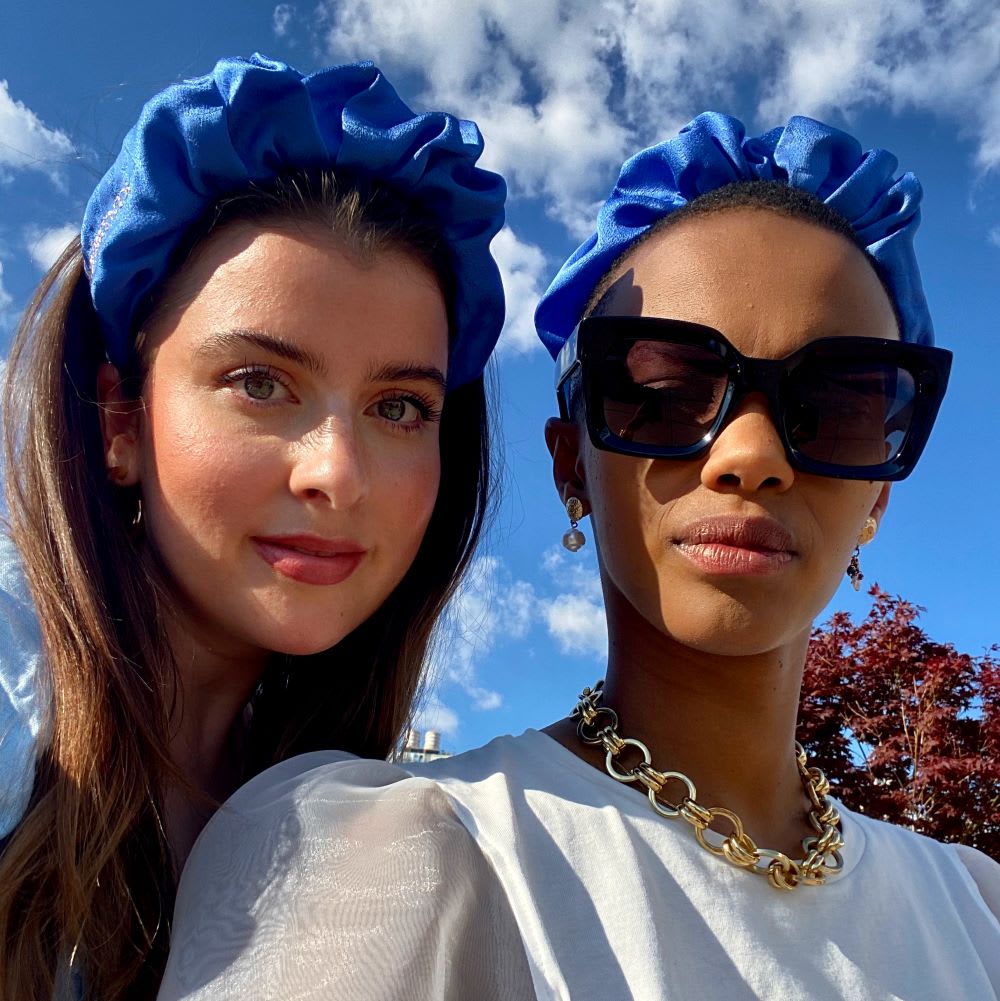
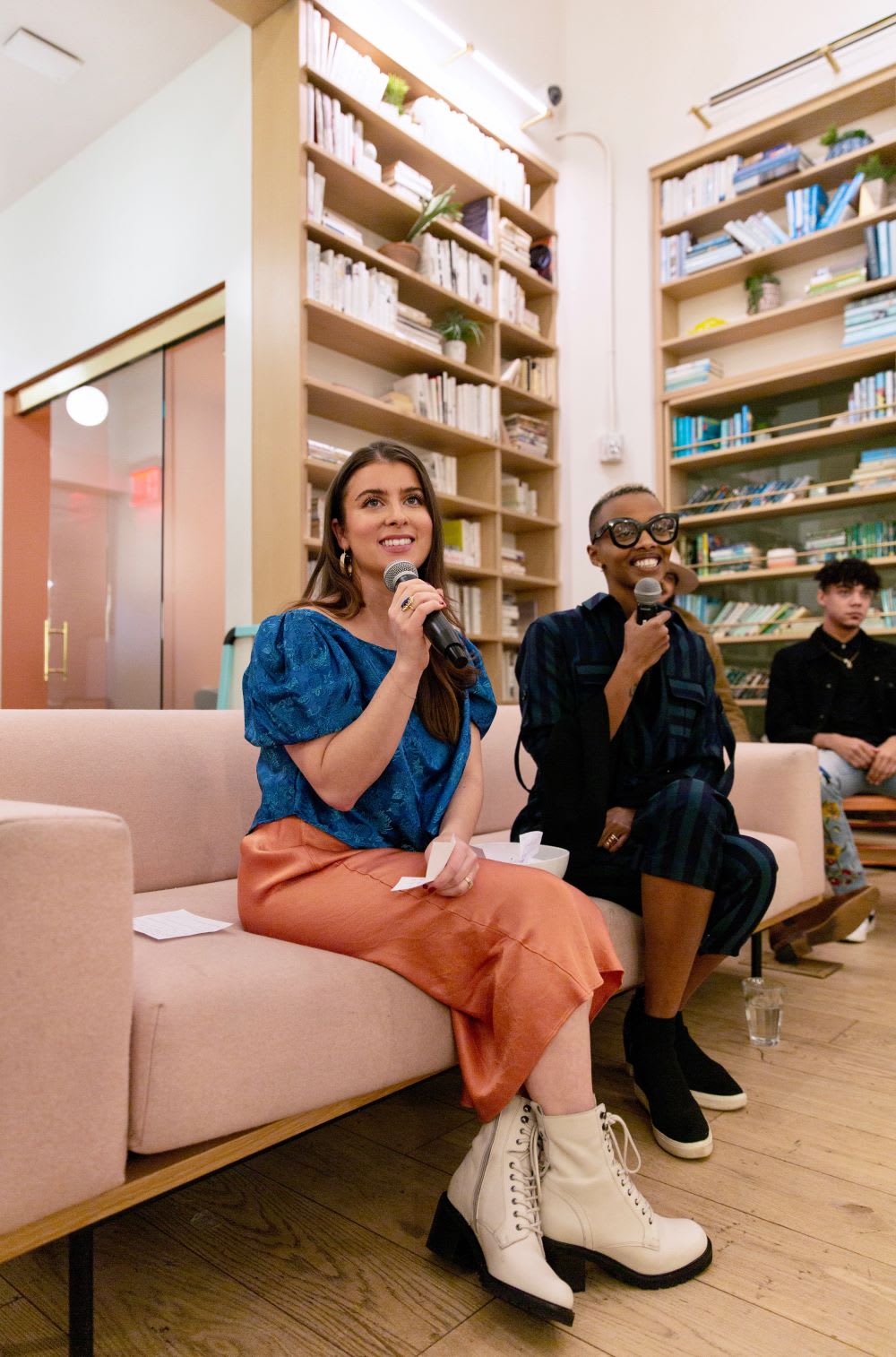
Yseult Polfliet and Hannah Pechter know how difficult it can be to navigate the conversation about race–so they decided to do something about it. Of the Rwandan diaspora and raised in Brussels, Yseult is the founder of gender-free children’s line, YOAH New York. Hannah is a white Jewish woman from Pennsylvania who recently left a career in the magazine industry. Together, through their podcast, The Kinswomen, the two aim to bridge the gap between women of color and white women by having open, honest discussions about race, and offering guidance on how to be an ally.
We chatted with Yseult and Hannah to hear more about what they do and why, and how we can all continue the conversation about race from a place of love and understanding.
Lulus: So how did the idea for The Kinswomen come about?
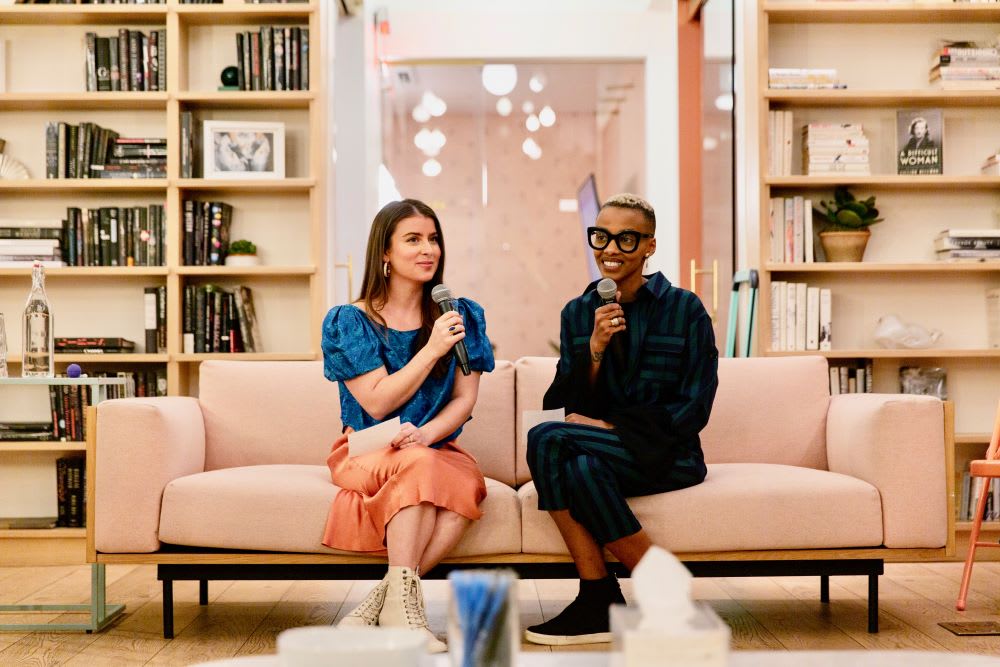
Hannah Pechter: Yseult and I met at an event about the divide between white women and women of color at the Wing. After the event, it was clear that we didn’t even scratch the surface. There was so much tension and energy in the air. Yseult and I wanted to continue the discussion, so we invited friends over to my living room for a monthly conversation about race. The living room sessions grew, so we decided to bring the conversation to a wider audience with a podcast.
Lulus: What kinds of topics you typically discuss and how do you decide which to focus on for each episode?
Yseult Polfliet: The goal of our space is to share varied and insightful narratives –something that humanizes and focuses on how people are experiencing their lives. People of color have become a monolith in the eyes of white people. That dehumanizes us and makes it easier to look away from the hurt and disparities that exist in our society still today. We have been really lucky in having incredible women with phenomenal stories to tell. We are just so grateful that they’ve been open and vulnerable with us.
Lulus: There is obviously a lot of conversation around race happening now. How do you feel your podcast adds to the conversation? What do you think sets it apart?
HP: We’re bridging the gaps between women of color and white women, and it’s not often you see cross-racial dialogues happening consistently, unflinchingly, and from a place of love. We talk about the interpersonal dynamics between us and our different experiences as a Black woman and a white woman. We share our guests’ stories as a way of humanizing the stats and numbers on race. I try to be as truthful as possible about all my internalized biases, how I’ve benefited from white supremacy, and all the ways that I’ve messed up along the way, in hopes that other white people realize that it’s OK to learn.
However, we must take accountability, apologize when we’ve done wrong, and commit to continuously learning. We stress that there is no binary when it comes to racism–like, all the good people are ‘not racist,’ and all the bad people are. Racism is a spectrum and shows up in countless ways, obvious and subtle. We strive to bring light to all of it.
Lulus: Is there any episode or topic that’s been the most difficult for you two?
YP: All of our episodes are deep–our guests share their personal experiences and lived moments. They’re all really interesting in their own way.
Lulus: What do you most hope people get out of listening to The Kinswomen?
HP: I hope our listeners find comfort and education in our conversations about race, that they begin to reflect on their own behaviors, that they enjoy the narratives of our guests, and feel inspired to start normalizing convos about race with their families, friends, and colleagues.
Lulus: Your mission also focuses heavily on how to be an ally. What does being an ally mean/look like to each of you?
HP: Agreed. I’m on an allyship journey, but I can’t self-identify as an ally. That’s up to the group I wish to be an ally to. But that’s a good thing–it makes me better and keeps me accountable.
Lulus: That’s a great point. You two also offer anti-racism training for companies–what does that entail and how did that come about?
HP: We’ve both worked in different industries and knew that pretty much all workplaces are problematic when it comes to race. Talking transparently in a workplace setting about race, racism, microaggressions, code-switching, bias, and tokenism is vital for a safe, inclusive, and profitable company. That said, it’s rarely prioritized or valued. There’s a big demand for it now, as companies rush to mitigate potential reputational or financial repercussions.
We work with companies on creating trust between their BIPOC and white employees, and rooting out the ways that bias and internalized racism reveal themselves within the company. This requires vulnerability and deep structural and paradigm shifts, but we’re seeing more and more companies get on board.
Lulus: How did you decide on the name The Kinswomen?
Lulus: Why are more people ready and willing to get involved now in this “racial reckoning?” How do you think we can make it stick in a meaningful way?
HP: I think people being at home more and on their phones more during quarantine created a rapt audience for this watershed moment. Maybe Covid-19 has made us more empathetic (I hope so.) The tragic thing is police brutality and systemic racism have burdened our fellow Black Americans for centuries. We have a long way to go until equity is achieved. Black people shouldn’t have to die to motivate white people. Let’s all keep that in mind before we get back to posting about banana bread.
If you’re reading this and you want to know how to be an ally, really commit, and know that it’s a lifelong journey. Know that it will be uncomfortable: Accept that part and keep going. Educate yourself continuously, take classes, pay Black educators, expose yourself to media and culture you otherwise wouldn’t. Question why your friend groups, workplaces, neighborhoods look the way that they do. Don’t be afraid to ruffle feathers–it’s crucial that we break the status quo. But you don’t have to do it alone. We’ll be here to support you on the way.
Have questions for Yseult and Hannah? Ask in the comments! For more honest conversation about race and how to be an ally, check out The Kinswomen Podcast.
(Images via The Kinswomen Podcast)
Join The Conversation (0)
Good share! thanks to https://www.lulus.com/