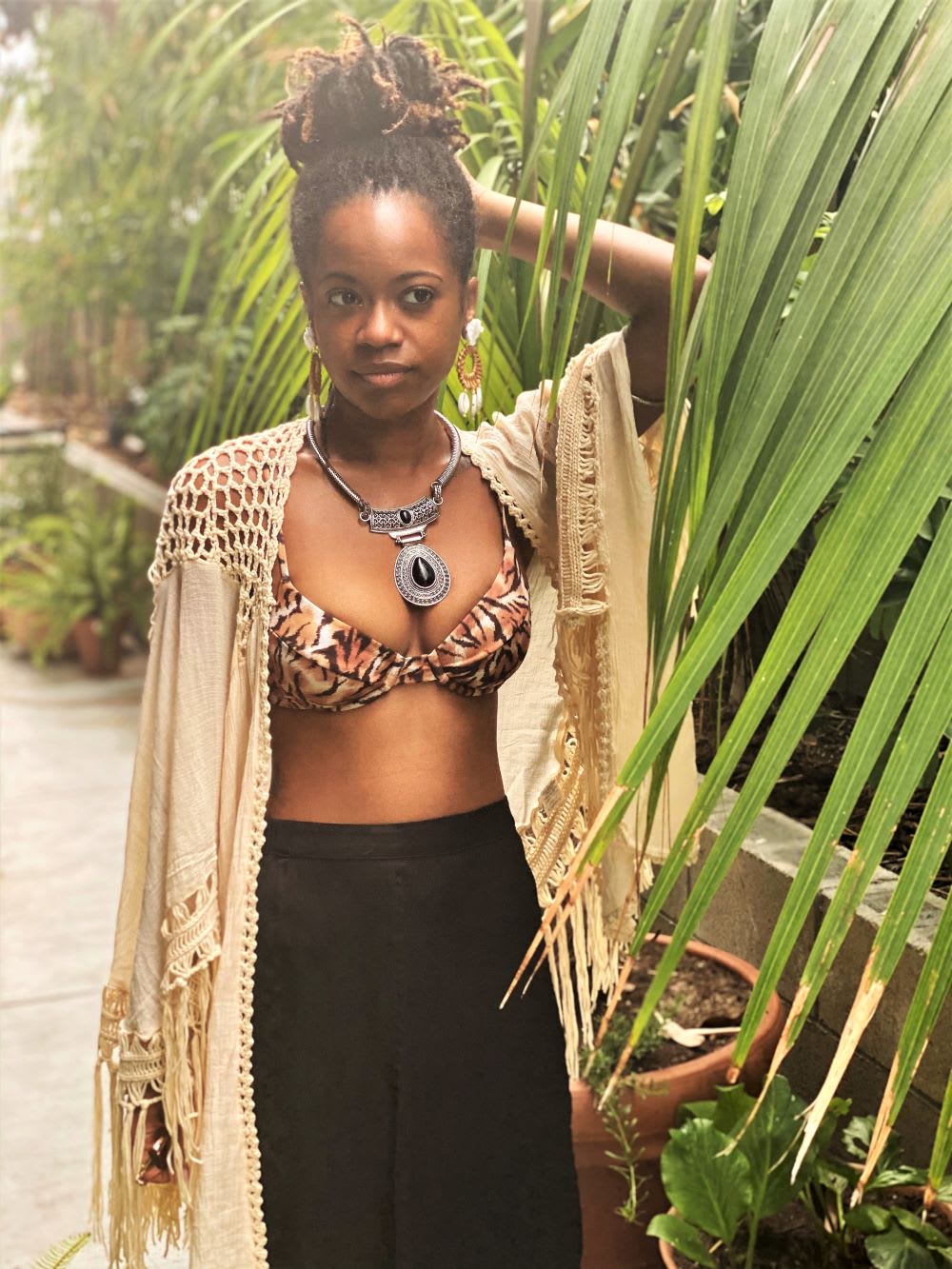
Chelsea VonChaz wants to talk about periods. The co-founder of charitable organization and social movement, #HappyPeriod, has spent the last five+ years working to provide individuals in need with access to menstrual hygiene products (through donation kits). She’s also opening up the conversation around menstruation and reproductive healthcare. We chatted with the *period powerhouse* about her commitment to menstrual equity, why girls and boys should learn about periods in school, and how to help destigmatize what comes naturally.
Lulus: So what is #HappyPeriod’s mission and how did it start?
Chelsea VonChaz: #HappyPeriod initially was a project between me, my Mama, and my closest girlfriends. We witnessed too many folks free bleeding across L.A. county, and we wanted to be the change on that. These were people experiencing homelessness, like on Skid Row (in L.A.). When you see someone layering up in stained clothes, with that kind of being this normal thing for them- it shouldn’t be. But it’s part of their reality.
Even in New York, where a lot of our ambassadors did distributions on the street (pre-COVID), they knew where to go to find women and trans men experiencing homelessness and free bleeding. It’s important to note that homelessness looks different to a lot of people depending on their situation, location, and more. Some may even have a full-time job, or two part-time jobs, and live in their car!
Lulus: Why are you so passionate about the issue of menstrual dignity? What does it mean to you?
CVC: I’m passionate about the advancement of menstrual health of black menstruators most of all. Menstrual equity means education, access, and affordability to manage one’s cycle and period care.
Lulus: Why do you think the issues of period poverty, menstrual equity, and destigmatization are finally starting to get more attention?
CVC: I think because certain people have done the work and done it well–that was the catalyst. 2015 was dubbed by the media as “the year of the period“–that year, my homegirl, Madame Gandhi (an amazing artist, musician, activist, and drummer for MIA), ran a marathon in London and her period started. That was the moment she decided, “Well, I’m not gonna stop,” and to acknowledge it as just a universal thing. Her picture went viral–her bleeding while finishing the marathon–and all these organizations popped up around period and hygiene.
That same year, ads for Thinx period underwear were banned and they went to court–it was a big deal to have a period panty ad on the NYC subway. 2015 was the start of #HappyPeriod and also Period Equity, which I’m on the board of. One of the [Period Equity] founders is a lawyer, one a political educator; the board is pretty diverse. They’ve been around and have worked with [feminist icons] Gloria Steinem and Bell Hooks, and they turned their attention to menstrual equity. I think we all just kind of aligned.
Lulus: Amen! 2020 has been a year for the books, as we all know. How has COVID-19 affected period poverty and the menstrual equity work you do?
CVC: We’re still busy if not busier. Brands still provide us with products but we had to suspend our volunteer programs and events to keep people safe and healthy. We’re still providing period care products to shelters and food banks, we are just telling brands to ship to them directly. (Not every city has a diaper bank, so a food bank will take donations of personal care products.) Unfortunately, I’m also familiar with cases of protestors getting arrested while menstruating, as well as students experiencing homelessness.
We will also have virtual classes starting on menstrual health and care, as well as virtual events and workshops centered on that–one with parents, some with teachers and administrators. Eventually, we will have our own curriculum. We’re still here!
Lulus: You also have #HappyPeriod for SELF workbook. Can you tell us what that entails?
CVC: It’s a digital guide to periods for readers as young as 9 years old. It’s the essential key to our menstrual health program, which solely focuses on educating everyone, to eliminate the negative bubble surrounding periods. We push to let the boys stay in our school workshops, but schools usually push back. I’m anti separating them because I believe sex ed should be for everyone: So many girls don’t know how they get pregnant and boys don’t, either–which is why it should be inclusive. For our virtual workbooks, we are including parents of boys in the marketing.
Lulus: Why do you think it’s so important to destigmatize period talk?
CVC: Well, I believe stigma doesn’t serve us well in anything, especially our bodies.
Do you have questions about your period or menstrual equity? Ask Chelsea in the comments!
(Images via Chelsea VonChaz)
Join The Conversation (0)