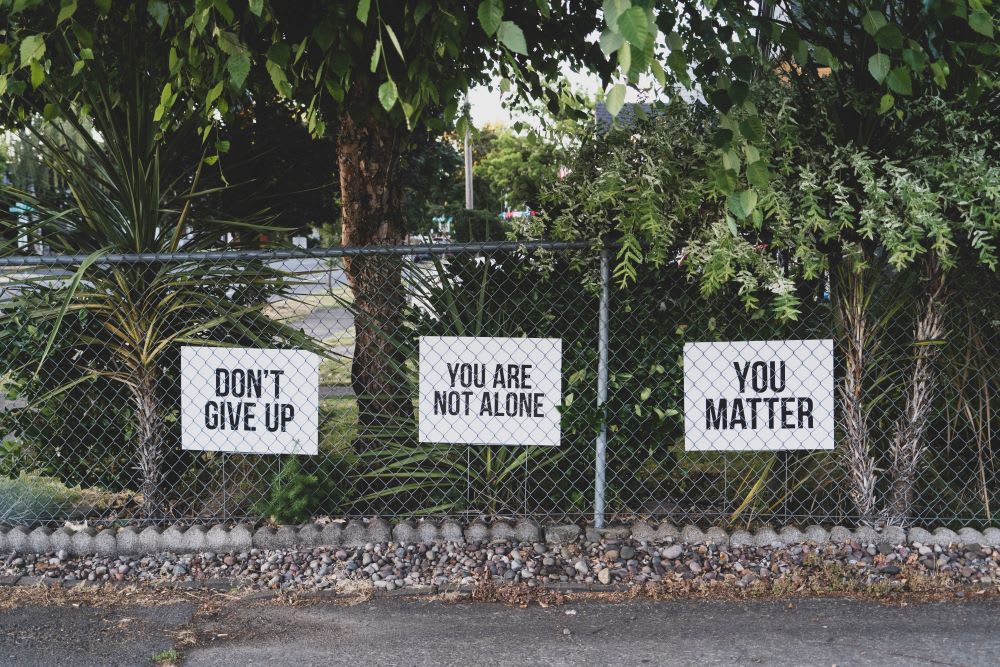
After the last few years, who couldn’t use a little extra mental health support? We have all been processing what feels like a neverending supply of anxiety, grief, and trauma, and attainable mental health resources feel more important than maybe ever.
That said, for members of marginalized and underrepresented communities, seeking support from organizations that align with your identity and understand your experiences can be easier–and more helpful. Ahead, see where to find resources that fit your needs and see how to be a mental health ally.
Mental Health Resources
It can often feel safer opening up to someone who shares in facets of your culture, identity, and circumstances–especially if you’re part of a group that is experiencing discrimination and/or added hardships. These resources are dedicated to the needs of specific communities.
For the LGBTQIA+ Community:

The LGBT National Hotline provided peer-based support for the LGBTQIA+ community via chat, email, and phone. The NAMI website provides a section focused on a variety of resources for the community as well.
For the AAPI Community:

National Asian American Pacific Islander Mental Health Association provides a resource list of state-level programs designed to meet AAPI-community mental health needs. The National Alliance on Mental Illness (NAMI) offers a section of its website with resources specifically for Asian Americans and Pacific Islanders.
For the Black Community:

The Loveland Foundation is committed to showing up for communities of color in unique and powerful ways, with a particular focus on Black women and girls. The NAMI website features a section dedicated to resources for the black community.
For the Latinx Community:

The NAMI website features a section dedicated to mental health issues in the Hispanic/Latinx communities, and provides resources. Mental Health America provides screening tools and pamphlets about mental health in both English and Spanish.
For Parents and Caregivers:

The Program for Early Parent Support (PEPS) provides a list of self-care best practices for parents. The National Alliance of Caregiving provides several resources for a diverse group of caregivers.
For Communities Experiencing Economic Oppression and Intergenerational Poverty:

To learn more about how socioeconomic status affects mental health, this article discusses the intersectionality between poverty and mental health issues. The SAMHSA National Helpline is a free information service, in English and Spanish, for individuals and family members facing mental health issues.
How to Be a Mental Health Ally:
“An ally is someone who takes action to support an underrepresented group, even if they themselves are not a part of the group,” Beckett Frith writes in How to Be a Workplace Mental Health Ally for All. Here are some simple ways you can be an active ally when it comes to mental health.
Listen

Practice active listening, including being attentive to non-verbal communication. Practice listening to understand, not react, and ask questions to clarify if you need to.
Ask

Check in: Ask things like “is this conversation still ok for you?” Check in about people’s boundaries and if they’re feeling triggered, activated, or dissociated. It might feel awkward to ask these sorts of things, but it’s an excellent way to support people.
Validate

You can show your support by validating what another person is experiencing. You can do this by actively listening without judgment and respecting someone’s boundaries.
Get Educated

There are many ways to get educated on mental health and advocacy. The Be There Certification course teaches folks how to support someone who is struggling with their mental health. It’s free and offered in English, Spanish, and French.
How are you caring for your mental health? Tell us in the comments.
This post is meant for informational purposes only, you should always reach out to a medical professional with specific issues. If you’re having suicidal thoughts, call 1-800-273-TALK (8255) to talk to a skilled, trained counselor at a crisis center in your area at any time (National Suicide Prevention Lifeline). If you are located outside the United States, call your local emergency line immediately.
Join The Conversation (0)