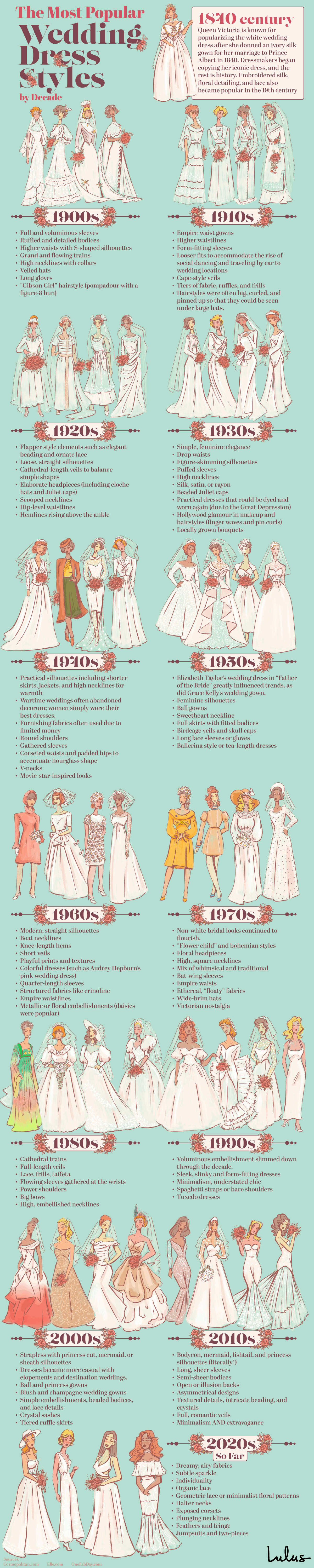
As with all fashion, wedding dress styles have evolved over time, influenced by entertainment, celebrities, royalty, practicality, and even world events. The history of wedding dresses is intertwined with history in general — after all, love still marches on no matter what is happening around the world. But what did brides wear in Victorian times? What did wedding dresses look like in the 1960s? And why are wedding dresses white? If you’ve been wondering about questions like these, you have come to the right place! The team at Lulus has created a gorgeous visual guide to wedding dress styles by decade starting from the woman who ignited the tradition of the white wedding dress:
When Did Wedding Dresses Become White?
Where did the tradition of a white wedding dress come from? White wedding dress origins can be traced to Queen Victoria’s marriage to her first cousin, Prince Albert, in 1840. Her exquisite dress featured an eight-piece bodice, a wide, open neckline, and abundant lace trim. She also wore an unconventional flower crown and a satin train more than 6 feet long. This is how she described her iconic ensemble: “I wore a white satin gown with a very deep flounce of Honiton lace, imitation of old. I wore my Turkish diamond necklace and earrings and Albert’s beautiful sapphire brooch.” The wedding was highly publicized, and before long, white wedding gowns were fervently sought after by the European elite. At the time, it was challenging to maintain the purity of white fabric, as laundering was expensive and city conditions were infamously dirty. This contributed to white wedding dresses becoming a symbol of purity, innocence, and wealth.
What Color Were Wedding Dresses Before White?
The history of wedding dresses is far more vibrant and colorful than the traditional white wedding dress we know today. What was the original color of wedding dresses? It varied. In ancient Rome, brides often wore long veils of deep yellow, described as “the color of flame.” This was meant to symbolize that the brides were “torches” delivering light and warmth into their new partners’ homes. Ancient Athenian brides wore long crimson or violet robes. In the Tang Dynasty, it became fashionable for brides to wear green as a nod to springtime, while grooms often wore red. Prior to the advent of white wedding dresses, brides in Europe did wear white if they could afford it, but even the wealthiest often opted for gold, blue, or red. For families that could not afford special wedding gowns, they simply wore their best dress, no matter the color or pattern. Until the middle of the 19th century, the notion of wearing a spectacularly expensive dress only once was absurd, even for royalty. In fact, even Queen Victoria continued to wear her dress to other special events!
What Were Wedding Dresses Like in the 1900s?
In 1900, wedding dresses and accessories had elements such as voluminous sleeves, full skirts, ruffled and detailed bodices, higher waists and S-shaped silhouettes, majestic and flowing trains, high necklines with elaborate collars, and long and delicate gloves.
What Were Wedding Dresses Like in the 1910s?
In the 1910s, wedding dresses were influenced by the more relaxed style of the Edwardian era. Popular 1910s wedding dress styles often had loose fits to accommodate dancing and featured delicate fabrics, tiers of ruffles and lace, empire-line silhouettes, higher waistlines, form-fitting sleeves, and cape-style veils. Hairstyles were big, pinned up, and coiled under large hats.
What Were Wedding Dresses Like in the 1920s?
In the 1920s, wedding dresses had flapper-style elements such as intricate beading and ornate lace, loose and straight silhouettes with lots of movement, cathedral-style veils, elaborate headpieces, scoop necklines, hip-level waistlines, and hemlines that exposed the ankle. Flapper-style wedding dresses are still iconic!
What Were Wedding Dresses Like in the 1930s?
In the 1930s, wedding dresses became more feminine and form-fitting, with drop waists, high necklines, and simple and elegant silhouettes. The Great Depression influenced brides to choose practical dresses that could be dyed and worn again after the wedding.
What Were Wedding Dresses Like in the 1940s?
In the 1940s, wedding dresses continued to be practical, with shorter skirts, jackets, and high necklines for warmth and mobility. Wartime weddings abandoned tradition, so brides often wore dresses they already had. Some dresses were crafted from furniture or curtain fabrics due to limited resources. Hourglass shapes became desirable, so corseted waists and padded hips emerged.
What Were Wedding Dresses Like in the 1950s?
In the 1950s, wedding dresses were greatly influenced by Elizabeth Taylor’s wedding dress in Father of the Bride as well as Grace Kelly’s wedding dress. Feminine shapes, ball gowns, sweetheart necklines, full skirts, and ballerina-style looks were popular.
What Were Wedding Dresses Like in the 1960s?
In the ’60s, wedding dresses often had playful prints and textures, modern and sleek silhouettes, boat necklines, structured fabrics like crinoline, and metallic or floral decorations. Colorful dresses, such as Audrey Hepburn’s pink wedding gown, blossomed on the wedding scene.
What Were Wedding Dresses Like in the ’70s?
In the ’70s, wedding dresses were often flowing, bohemian, ethereal, and whimsical. Colorful dresses continued to flourish, and Victorian nostalgia influenced wedding fashion — in fact, floral headpieces similar to Queen Victoria’s crowned many brides. Many vintage wedding dress styles are inspired by 1970s wedding dress looks.
What Were Wedding Dresses Like in the ’80s?
In the ’80s, wedding dress styles were all about big embellishments — big bows, power shoulders, full-length veils, cathedral trains, and embellished necklines were in vogue. Lace, frills, and taffeta were key materials used for ’80s-style wedding dresses.
What Were Wedding Dresses Like in the ’90s?
In the ’90s, wedding dresses slimmed down into sleek, slinky, and form-fitting silhouettes as the decade progressed. Minimalism and understated chic were desired ’90s-style wedding dress looks. Shoulders were often bare or with thin straps. Menswear-inspired dresses also took the stage.
Be sure to check out our great selection of wedding dresses, wedding guest dresses, and bridesmaid dresses! You’ll find both trendy vintage wedding dress styles and modern wedding dress styles. You can even find bridal jumpsuits!
The Most Popular Wedding Dress Styles by Decade
1840
Queen Victoria is known for popularizing the white wedding dress after she donned an ivory silk gown for her wedding with Prince Albert in 1840. Dressmakers began copying her iconic dress, and the rest is history. Embroidered silk, floral detailing, and lace also became popular in the 19th century.
1900s
- Full and voluminous sleeves
- Ruffled and detailed bodices
- Higher waists with S-shaped silhouettes
- Grand and flowing trains
- High necklines with collars
- Veiled hats
- Long gloves
- “Gibson Girl” hairstyle (pompadour with a figure-8 bun)
1910s
- Empire-line gowns
- Higher waistlines
- Form-fitting sleeves
- Looser fits to accommodate the rise of social dancing and traveling by car to wedding locations
- Cape-style veils
- Tiers of fabric, ruffles, and frills
- Hairstyles were often big, curled, and pinned up so that the hair could be seen under large hats.
1920s
- Flapper-style elements such as elegant beading and ornate lace
- Loose, straight silhouettes
- Cathedral-length veils to balance simple shapes
- Elaborate headpieces (including cloche hats or Juliet caps)
- Scoop necklines
- Hip-level waistlines
- Hemlines rising above the ankle
1930s
- Simple, feminine elegance
- Drop waists
- Figure-skimming silhouettes
- Puffed sleeves
- High necklines
- Silk, satin, or rayon
- Beaded Juliet caps
- Practical dresses that could be dyed and worn again (due to the Great Depression)
- Hollywood glamour makeup and hairstyles (finger waves and pin curls)
- Locally grown bouquets
1940s
- Practical silhouettes such as shorter skirts, jackets, and high necklines for warmth
- Wartime weddings often abandoned decorum, so women simply wore their best dresses
- Furnishing fabrics often used due to limited money
- Round shoulders
- Gathered sleeves
- Corseted waists and padded hips to accentuate hourglass shape
- V-necks
- Movie-star-inspired looks
1950s
- Elizabeth Taylor’s wedding dress in Father of the Bride greatly influenced trends, as did Grace Kelly’s wedding gown.
- Feminine silhouettes
- Ball gowns
- Sweetheart neckline
- Full skirts with fitted bodices
- Birdcage veils and skull caps
- Long lace sleeves or gloves
- Ballerina-style or tea-length dresses
1960s
- Modern, straight silhouettes
- Boat necklines
- Knee-length hems
- Short veils
- Playful prints and textures
- Colorful dresses (such as Audrey Hepburn’s pink wedding dress)
- Quarter-length sleeves
- Structured fabrics like crinoline
- Empire waistlines
- Metallic or floral embellishments (daisies were popular)
1970s
- Non-white bridal looks continued to flourish.
- “Flower child” and bohemian styles
- Floral headpieces
- High, square necklines
- Mix of whimsical and traditional
- Bat-wing sleeves
- Empire waists
- Ethereal, “floaty” fabrics
- Wide-brim hats
- Victorian nostalgia
1980s
- Cathedral trains
- Full-length veils
- Lace, frills, taffeta
- Flowing sleeves gathered at the wrists
- Power shoulders
- Big bows
- High, embellished necklines
1990s
- Voluminous embellishment slimmed down through the decade
- Sleek, slinky, and form-fitting dresses
- Minimalism, understated chic
- Spaghetti straps or bare shoulders
- Tuxedo dresses
2000s
- Strapless with princess cut, mermaid, or sheath silhouettes
- Dresses became more casual with elopements and destination weddings
- Ball and princess gowns
- Blush and champagne wedding gowns
- Simple embellishments, beaded bodices, and lace details
- Crystal sashes
- Tiered ruffle skirts
2010s
- Bodycon, mermaid, fishtail, and princess silhouettes
- Long, sheer sleeves
- Semi-sheer bodices
- Open or illusion backs
- Asymmetrical designs
- Textured details, intricate beading, and crystals
- Full, romantic veils
- Minimalism and extravagance
2020s (So Far)
- Dreamy, airy fabrics
- Subtle sparkle
- Individuality
- Organic lace
- Geometric lace or minimalist floral patterns
- Halter necks
- Exposed corsets
- Plunging necklines
- Feathers and fringe
- Jumpsuits and two-pieces
Join The Conversation (0)