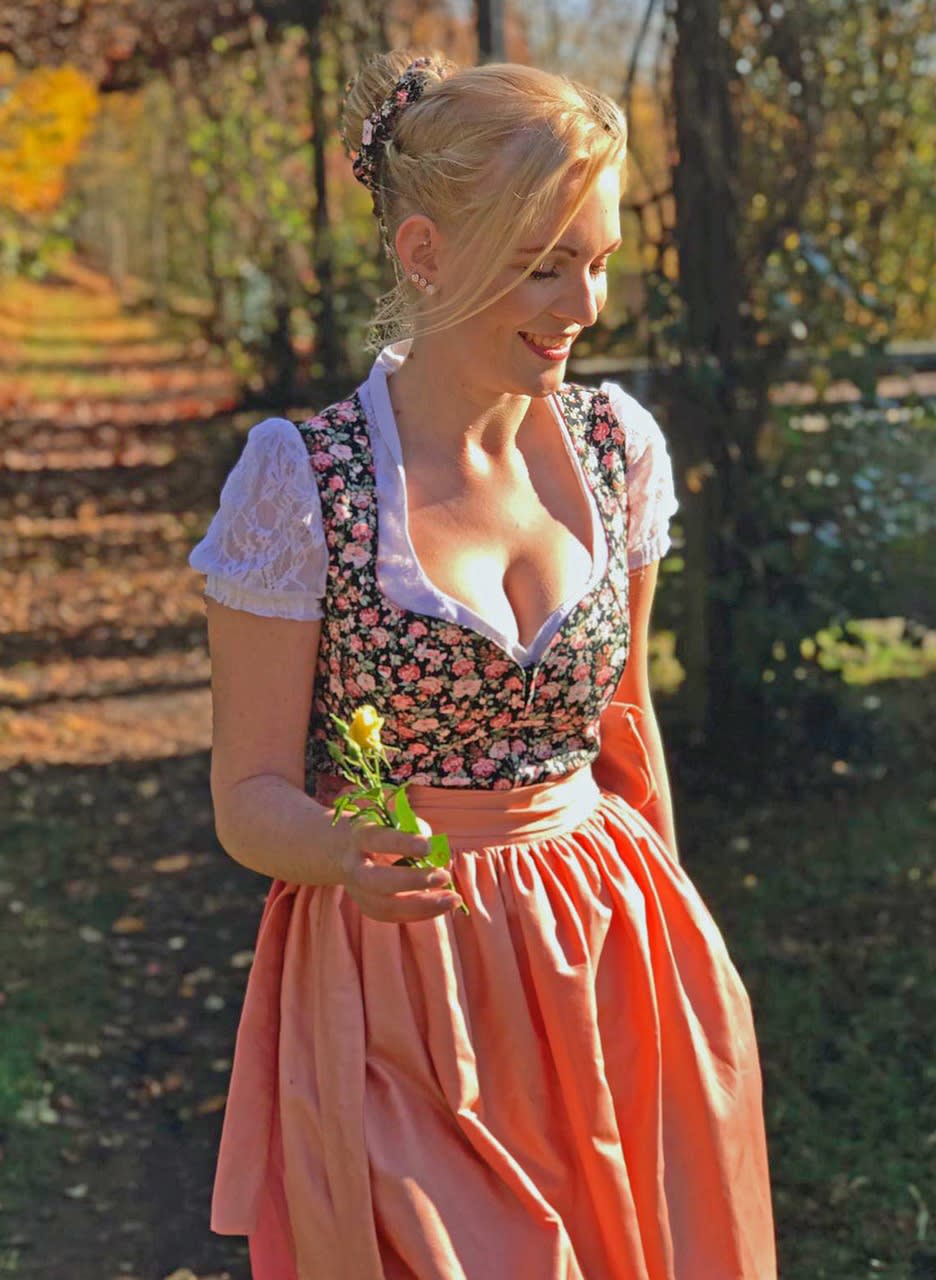
Learning about a country’s traditional clothing can help us to learn more about their culture. Each piece of clothing combines practical functionality with artistic expression to tell us something about who the wearer was and how they lived. The colors and materials can also hold meaning; the colors that people wear can relate to their cultural practices or to the availability of different dye-containing plants where they lived, and the textiles they use can reflect aspects of a country’s economy and trading practices. Germany’s sartorial past includes a variety of traditional pieces from different regions, and each can teach us something about how people lived in that area.
Trachten
When we look at German traditional clothing, what we’re looking at are trachten. “Trachten” is the plural of “tracht,” which means “costume.” Trachten are the traditional outfits worn by Germans of the past, including basic clothing pieces as well as accessories like hats and jewelry. Examining trachten can help us learn about the wearers’ social class, occupation, or religion. For example, clothing made of cotton indicates a working-class wearer, while the use of more expensive materials or intricate embroidery means that the wearer was likely wealthy.
- German Native Dress: Fashion or Costume?
- What Is Tracht?
- From the Mountains to the Sea: Germany and its Costumes
- Traditional Dress (Tracht)
- An Introduction to Germany’s Traditional Dress
Dirndls and Lederhosen
Some of the most recognizable examples of German traditional clothing are dirndls and lederhosen. Dirndls are women’s outfits that consist of a tight-fitting bodice with a blouse underneath, a skirt, and an apron. These outfits were originally worn by Bavarian peasants and made of sturdy cotton, but over time, dirndls were adopted by all economic classes. Wealthier women might wear a dirndl made with silk and add embellishments to make their look unique.
Lederhosen were also a Bavarian invention. Lederhosen are leather shorts with suspenders and a decorative piece that connects the two straps in the front. Men wear lederhosen with a shirt underneath as well as tall socks. Like dirndls, lederhosen were created to be practical; not having long pant legs made it easier for laborers to move around, and it also made the outfit require less material, meaning that it would be cheaper. The sturdy leather also made lederhosen long-lasting and easy to clean. These working-class rompers fell out of favor in the 19th century, but the look was revived in the late 1800s as a symbol of Germany’s heritage.
- The Dirndl: The German Dress
- Why the Dirndl Is So Much More Than a Dress for Oktoberfest
- The Meaning Behind Which Side to Tie the Dirndl Apron On
- Lederhosen
- The Essential Dirndl and Lederhosen Guide
Headwear
Women have worn a variety of different hats throughout German history, ranging from simple linen bonnets to the goldhaube, an ornate golden hat featuring intricate embroidery, metal lace, sequins, and other embellishments. Another ostentatious traditional women’s hat is the bollenhut, a wide-brimmed hat with large pompoms on top. A bollenhut for an unmarried woman would feature red pompoms, while a married woman’s hat would have black pompoms.
The most famous example of a traditional German men’s hat is the Tyrolean hat, a small-brimmed cap made of green felt that would often be adorned with a hatband as well as a feather, a tuft of animal hair, or flowers.
Trachten Today
Many of Germany’s traditional fashions are no longer commonly worn, but some modern designers have taken inspiration from how people used to dress in centuries past, putting their own spin on these looks to create something fresh and on-trend. Dirndls and lederhosen are also still worn for cultural events like the annual Oktoberfest celebrations, which are held all over the world.
- The Comeback of Dirndls and Lederhosen
- Bavarian Style
- At Oktoberfest, Controversy Brews Over Designer Dirndls
- Lederhosen and Dirndls Make a Comeback
- How Munich Turned Traditional Fashion Into Avant-Garde
- From Berlin to Cologne, Bavarian Fashion Is en Vogue
German Heritage and Tracing Your Family’s Roots
Here are some resources that can help you to further explore your German ancestry:
- German Origins in the United States
- Tracing German Relatives Through Vital Records
- Deciphering Old German Script
- German Genealogical Word List
- Finding Their Hometown: German Immigrants in American Church Records
- Explore Your German Heritage
- Search German Historic Newspapers
- German Family Books Indexed by Location
- Searching for Your German Ancestors
- How to Use the Meyers Gazetteer to Find German Places
- German History in Documents and Images
- Common Occupations Translated From Kurrent Script
- Matricula: Church Records Online
- Searching for German Ancestors
- How to Begin Genealogical Research
- How to Build a Family Tree: Tracing Your Ancestors
- Getting Started With Genealogy Research
- Three Ways to Research Your Family Tree
- Five Simple Steps to Start Your Family History Journey
Join The Conversation (0)