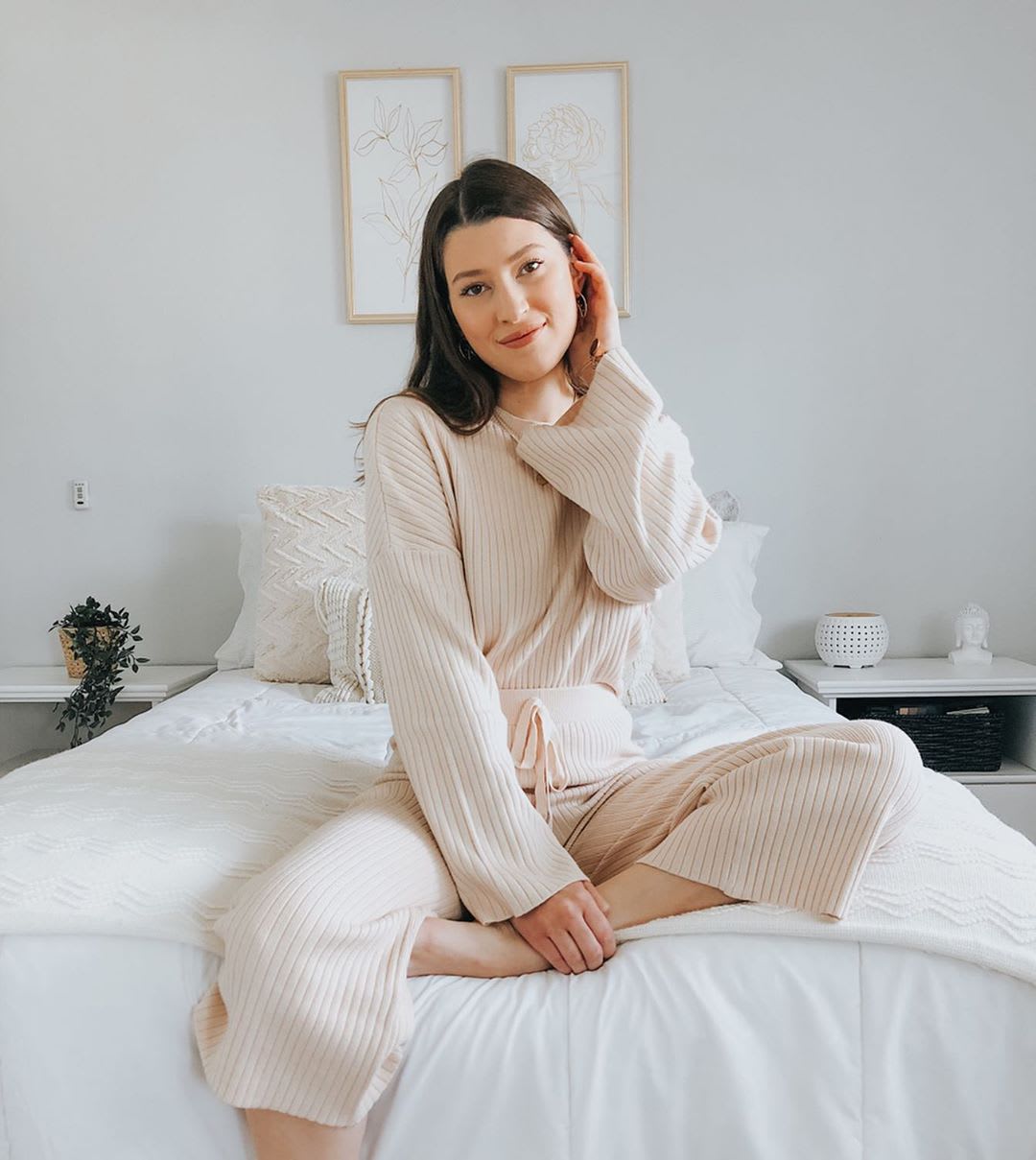
If you’ve ever spent hours tossing and turning to try to get to sleep, or you’ve fallen asleep and woken up in the middle of the night, wide awake for hours, it could be your sleep environment that needs to be reevaluated. While we know that getting our bodies into a routine is one of the best ways to maintain healthy Z’s, there are other factors that can be interfering with the quality of sleep you’re getting. From adjusting the temperature of your room to choosing the right colors for your walls, here’s how to sleep better at night, according to the experts.
Turn down the temperature.
Cooler temperatures will help you stay asleep and can even boost metabolic health. Of course, this varies for everyone, but temperatures above 75 degrees (and below 54 degrees) are known to interfere with sleep, says Terry Cralle, RN, certified clinical sleep educator, and Saatva sleep consult. “The suggested bedroom temperature for optimal sleep is between 60 and 67 degrees Fahrenheit,” says Cralle.
Sleeping at appropriate temperatures can help ease insomnia. “According to the research, our brains love a cool sleeping temperature,” Cralle says, citing a study from the American Academy of Sleep Medicine. Ideal sleep temperature can also improve metabolic health (i.e. your cholesterol, blood pressure, and blood sugar). According to Cralle, “a colder body temperature boosts the production of brown fat, which is a type of fat that burns calories instead of storing them,” a fact that was confirmed by a 2014 study from the American Diabetes Association.
Pick the right mattress for your sleep type.
Did you know that the way you sleep dictates the type of mattress you should be sleeping on? Tara Youngblood, physicist, leading sleep expert, and Co-Founder/CEO of ChiliSleep, says there are three different types of sleepers: the side sleeper, back sleeper, and stomach sleeper.
Side sleepers will want to stick with a softer mattress so it can mold to the curves of the body. Since you are putting the most pressure on your shoulders and hips, it’s important to go on the softer side for proper alignment. Any mattress material that easily molds with your body (like a memory foam mattress) is right for you. (Try the Saatva Classic Mattress)
Back sleepers need a firmer mattress than side sleepers: The mattress needs to help your spine remain neutral. Your neck and spinal cord should be completely aligned if you sleep on your back so no pain occurs in your shoulders or hips. If you are lighter in weight, you can purchase a softer mattress, while those heavier in weight should lean towards the firmer side. (Try the Casper Wave Hybrid Mattress)
Stomach sleepers need the firmest mattress of them all. You need to be able to lift your hips and the front of your body to align with your head and your spine. (Try the Dream Cloud Luxury Hybrid Mattress)

Don’t sleep with too many pillows.
While a pile of pillows looks beautiful on your bed during the day, you should really only be sleeping with one pillow. “A pillow’s purpose is to support your neck while you’re sleeping. This allows you to have a comfortable sleep without any back pain,” says Youngblood.
If you feel the need to stick a second pillow under your head, then it’s entirely possible that the pillow you’ve chosen isn’t thick enough to give you the elevation your neck needs. The firmness of your pillow also coincides with the way that you sleep. If you are a side sleeper, your pillow should be more on the firmer side. If you are a back sleeper, medium firmness is ideal. If you’re a stomach sleeper, you will need very little support, suggests Youngblood.
Set the mood with darker colors.
Color can play a big part in helping you get to sleep, and stay asleep. Youngblood suggests surrounding yourself with colors that promote relaxation and do not overstimulate your brain.
“Colors that promote calmness will allow your brain to produce more melatonin and allow you to fall asleep,” she says. “One of the best colors to help you fall asleep is blue. Your brain is extremely receptive to blue. When your eyes see the color blue, it sends a message to your brain saying you are in a calm environment, allowing your heart rate and blood pressure to lower,” Youngblood explains.
Kalle Simpson, Founder and CEO of Discover NIGHT also recommends sleeping with dark-colored sheets for the best night’s sleep. “Ideally the bedroom utilizes dark colors everywhere from the walls to the bedding itself, minimizing the amount of white/light color,” she says. “Black negates light, where white reflects it. In order to create the dark environment that is ideal for deep sleep, the more light that is negated, the better.”
Additionally, don’t underestimate blackout curtains for maximum light blockage. This will ensure you’re not waking up with the sun every morning.

Ditch the electronics.
I know, it’s hard to not check the trending videos on TikTok or catch up on your Instagram feed in bed, but logging off your electronics before you hit the pillow can help you fall asleep faster.
Dr. Ben Smarr, Science Advisor to Oura recommends dimming bright lights 1-2 hours before going to sleep and avoiding blue light at least 30 minutes before trying to go to bed. “By tuning out earlier, you can make sure your circadian rhythm isn’t disrupted by your screen’s blue light,” he says. Instead, try meditating or grabbing a book before bed to help you relax and unwind.
Did these tips help you sleep better at night? Tell us in the comments–and shop Sleepwear for a stylish slumber!
Join The Conversation (0)